Topics > Northumberland > Civil Parishes in Northumberland > Greenhead Civil Parish > Section of Stanegate Roman road, NE of Greenhead
Section of Stanegate Roman road, NE of Greenhead
Map showing the Scheduled Monument area for the section of Stanegate, with a Roman cemetery at it's west end.
A surviving section of the Stanegate Roman road, located north-east of the village of Greenhead, exists as intermittently upstanding earthworks. At the western end of this section of Stanegate are the buried remains of a cemetery, adjacent to Carvoran Roman fort. The site, which straddles the civil parishes of Greenhead and Haltwhistle, is a Scheduled Monument (legally protected).
Scheduled Monument (#1010956): The section of Stanegate Roman road from Fell End Roman temporary camp to the track to Old Shield, and the Roman cemetery adjacent to Carvoran Roman fort
Click the headings below to expand (selected extracts from the Historic England scheduling)
The Stanegate military road linked Corbridge and Carlisle, both of which were also situated on important north-south routeways. It also extended west of Carlisle towards the Cumbrian coast. The construction of a series of forts along the road line allowed many troops to be stationed in this crucial frontier area and ensured that the area could be extensively patrolled. A series of smaller watchtowers were also built to help frontier control. The Stanegate frontier thus created, developed further and was consolidated during the late first and early second century AD and helped crystallise Roman tactics and military expectations in the area. The function of the road and its forts changed when Hadrian's Wall was constructed to the north and their support roles were, initially at least, enhanced. The later history of the road and its forts and their relationship with the Wall are less well understood although, overall, their strategic functions declined as the new frontier line was confirmed.
This stretch of the Stanegate survives well as an earthwork, while the accompanying cemetery survives well below ground. Identified Roman cemeteries are rare and important because of the information they hold on burial customs and rites and on the individuals interred there.
The monument includes a section of the Stanegate Roman road and the site of a Roman cemetery adjacent to it on the approach to the Roman fort at Carvoran. The Stanegate is visible intermittently as an upstanding earthwork, while the cemetery lies buried below the modern ground surface.
To the east of Fell End camp, the Stanegate turns WNW and then follows a straight alignment directly to the south side of the fort at Carvoran. The remains of the road include a raised bank which forms the spine of the road with drainage ditches flanking it on either side. The spine and ditches are best preserved to the west of Painsdale Burn where together they measure 22m across. The spine survives to a maximum height of 0.5m. In places the remains have been damaged by quarrying or are overlain by ridge and furrow cultivation.
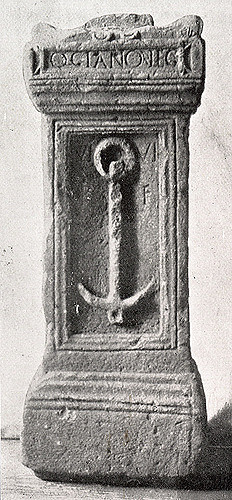
The cemetery was probably the burial ground for the the fort and surrounding settlement at Carvoran. Finds from the area include human remains, a cremation burial, a stone coffin, and six inscribed tombstones.


from https://historicengland.org.u…
The section of Stanegate Roman road from Fell End Roman temporary camp to the track to Old Shield, and the Roman cemetery adjacent to Carvoran Roman fort
- ....The Stanegate military road linked Corbridge and Carlisle, both of which were also situated on important north-south routeways. It also extended west of Carlisle towards the Cumbrian coast. The construction …
Added by
Simon Cotterill

from https://historicengland.org.u…
The section of Stanegate Roman road from Fell End Roman temporary camp to the track to Old Shield, and the Roman cemetery adjacent to Carvoran Roman fort
- ....The Stanegate military road linked Corbridge and Carlisle, both of which were also situated on important north-south routeways. It also extended west of Carlisle towards the Cumbrian coast. The construction …
Added by
Simon Cotterill