Topics > Northumberland > Haltwhistle > Haltwhistle Burn Roman Fortlets > Haltwhistle Burn 1 temporary camp, fortlet, and section of Stanegate
Haltwhistle Burn 1 temporary camp, fortlet, and section of Stanegate
Scheduled Monument (#1010945): Haltwhistle Burn 1 Roman temporary camp, fortlet and section of the Stanegate
Click the headings below to expand (selected extracts from the Historic England scheduling)
The Haltwhistle Burn 1 Roman temporary camp, Haltwhistle Burn fortlet and the stretch of the Stanegate survive well as upstanding earthworks with accompanying silted up ditches. The rarity of temporary camps, and in particular examples with upstanding remains, identifies them as nationally important. The remains will retain significant information on the development of the frontier systems over time. In addition the fortlet is unusual, as local circumstances must have required the fortlet to house a permanent garrison at this point on the Stanegate; it was more usual for the Stanegate to be guarded by soldiers based in larger forts.
The monument includes the Roman temporary camp known as Haltwhistle Burn 1, the Haltwhistle Burn Roman fortlet, and a stretch of the east-west Roman road known as the Stanegate. These archaeological remains survive as upstanding features. The east facing temporary camp occupies the summit and north facing slopes of a low ridge which extends west towards the Haltwhistle Burn. It commands good views on all sides and encloses an area of 1ha.
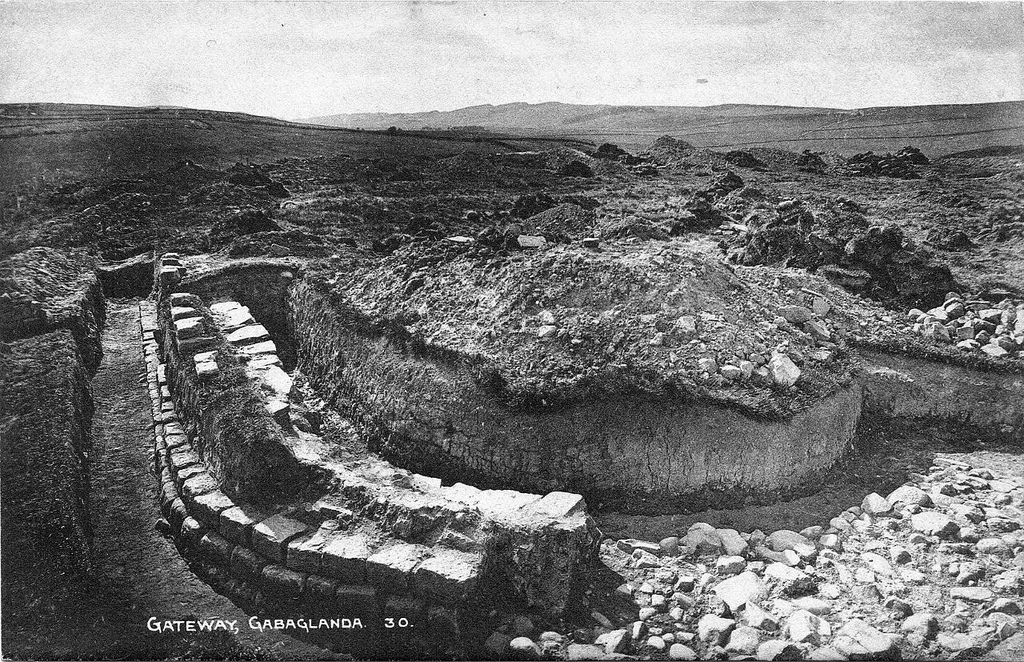
The rampart is best preserved in the south east where it is 0.1m high internally and 0.7m above the base of the ditch. The ditch is on average 0.2m deep, though a seasonal watercourse has removed a section on the north side and a hollow way has destroyed part of the ditch at the south west angle. Excavations across the south east corner in 1907-8 revealed that the ditch was 1.2m wide and 0.6m deep, and that its centre line was 2.4m outside that of the rampart. Turf had been used for the foundation of the rampart and for an outer revetment. The rampart was made from the material upcast from the ditch. Two gateways still survive; one in the west side and one in the south. That on the west has been disturbed by surface quarrying and trackways, though its external defence bank survives to a height of 0.2m.
The south gateway is better preserved, and its outer defence bank survives to a height of 0.4m. An archaeological trench cut through this gateway showed that the bank of the external gateway defence was built in the same way as the rampart. The modern public road to Burnhead and Cawfields crosses the north and east defences at the points opposite the south and west entrances of the camp, precisely where the gateways in the north and east sides would be expected to be located.
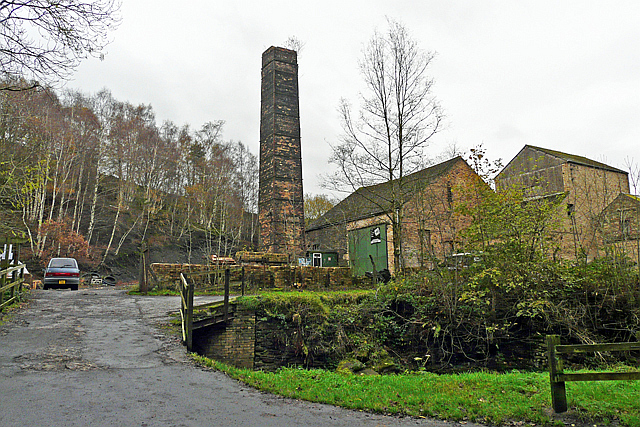
The fortlet is situated on gently sloping ground before the steep drop into Haltwhistle Burn to the west, and south of the temporary camp. It guarded the crossing of the Burn by the Stanegate, and was built around AD 105. It is therefore earlier in date than Hadrian's Wall itself. Internally the camp measures about 55m north to south and 65m east to west. Some of the internal features, including a barrack block and officers quarters, are still visible as earthworks. Externally, the defences were strengthened by the provision of an outwork. The area around the fortlet has been disturbed by watercourses and by the tracks and tramways associated with the 19th century ironstone mines 400m to the east. The scarps on the east bank of the Burn have also been extensively quarried away.
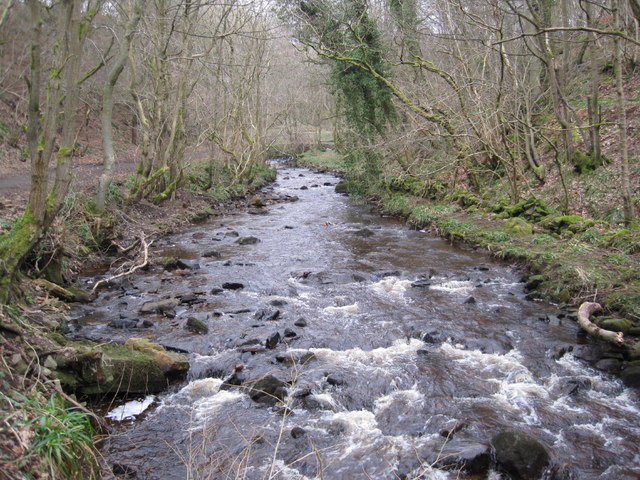
The Stanegate which was the main-east west road survives as a prominent ridge with side ditches. Its course changes as it nears the fortlet and turns south west to negotiate the steep and narrow valley of the Haltwhistle Burn which it descends at a constant gradient. Excluding the ditches, the road measures about 8m across. After the Stanegate crosses the burn to the SSW of the fortlet, its course can be clearly observed ascending the west bank of the Burn before it straightens up on its way through Markham Cottage temporary camps.


from https://historicengland.org.u…
Haltwhistle Burn 1 Roman temporary camp, fortlet and section of the Stanegate
- "The monument includes the Roman temporary camp known as Haltwhistle Burn 1, the Haltwhistle Burn Roman fortlet, and a stretch of the east-west Roman road known as the Stanegate. These …
Added by
Simon Cotterill

from https://historicengland.org.u…
Haltwhistle Burn 1 Roman temporary camp, fortlet and section of the Stanegate
- "The monument includes the Roman temporary camp known as Haltwhistle Burn 1, the Haltwhistle Burn Roman fortlet, and a stretch of the east-west Roman road known as the Stanegate. These …
Added by
Simon Cotterill