Topics > Heritage Sites > Gibside > Gibside Hall
Gibside Hall
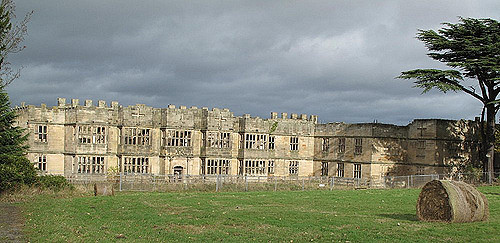
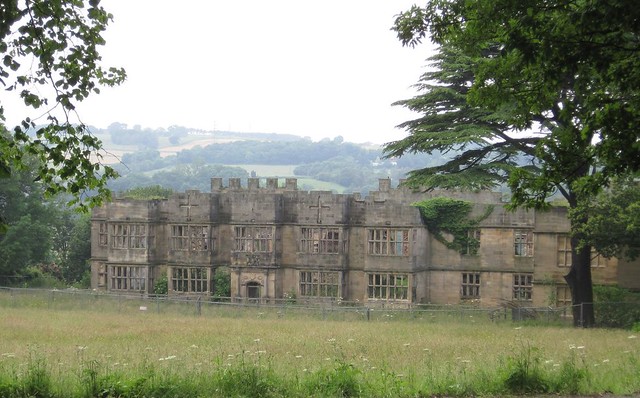
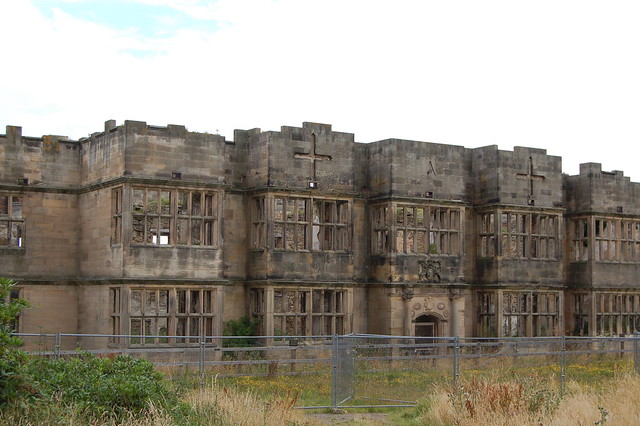
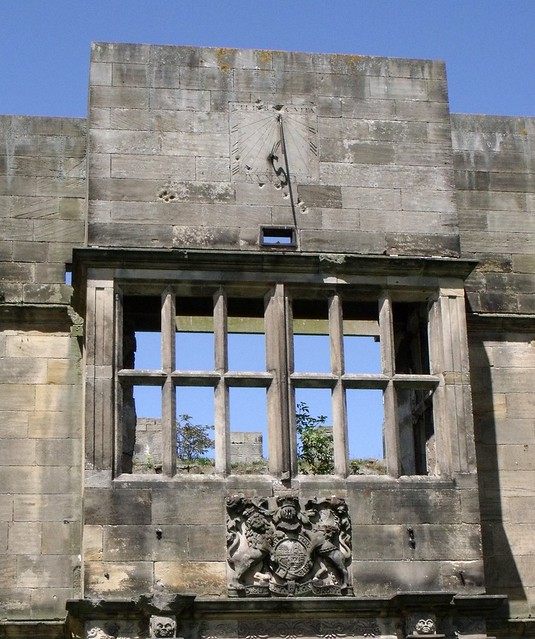
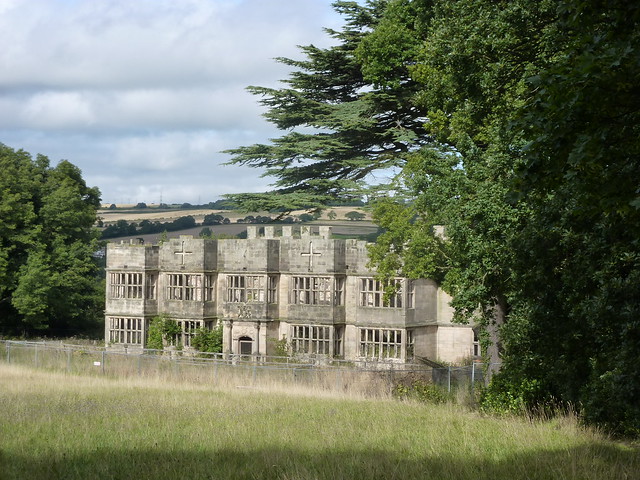
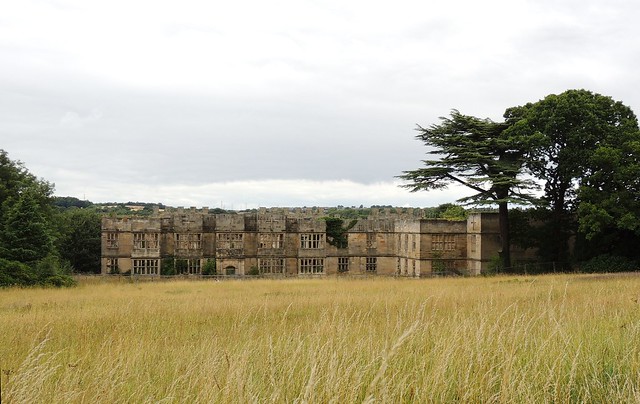
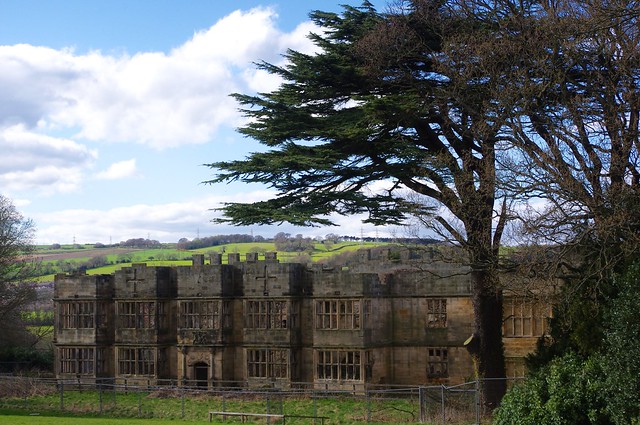
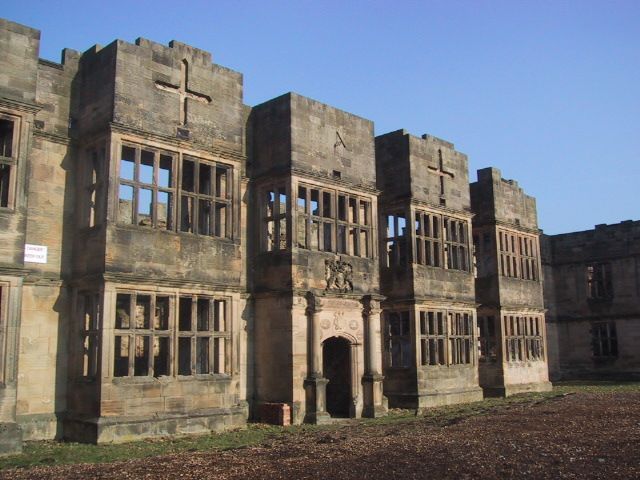 The substantive remains of Gibside Hall are an important example of a country house and its’s developments from the 17th century to the 19th century. The building’s origins date back to the 1620s, owned by the Blakiston family, until it passed to the Bowes family in the 18th century. The Hall was altered and extended for coal owner George Bowes and subsequent owners. However, it was abandoned in the 1920s and had become a derelict, roofless shell by the 1950s. The estate has been managed by The National Trust since 1965. The Gibside grounds are popular with visitors, but the Hall is longer open to the public for safety reasons, but it remains a visually striking focal point of the estate. The ruins of Gibside Hall are Grade II* listed on the National Heritage List for England and a Scheduled Monument (legally protected).
Scheduled Monument (#1017224): Gibside Hall, 17th to 19th century country house
Click the headings below to expand (selected extracts from the Historic England scheduling)
About 5000 country houses are known to have been standing in 1675; of these about 1000 are thought to survive, although most have been extensively altered or rebuilt in subsequent centuries to meet new demands and tastes. Houses which are uninhabited, and have thus been altered to a lesser degree, are much rarer. Surviving country houses of the late Tudor and early Jacobean period stand as an irreplaceable record of an architectural development which was unique both to England and to a particular period in English history characterised by a flourishing of artistic invention; they provide an insight into politics, patronage and economics in the early post-medieval period. All examples with significant surviving archaeological remains are considered to be of national importance.
Although in poor condition, Gibside Hall still stands to first floor level and has provided important information on the development of a country house from the 17th century to the 19th century. Ongoing recording work at the site will provide further important information on its development.
The monument includes the remains of Gibside Hall, situated on the crest of a north facing escarpment to the south of Rowlands Gill and the River Derwent. Although the visible external form of Gibside Hall is that of an early 19th century country house, parts of the internal structure of the house are of the 17th century. A 16th century inventory of contents exists for an earlier house on the site, although no fabric has yet been identified as predating the 17th century.
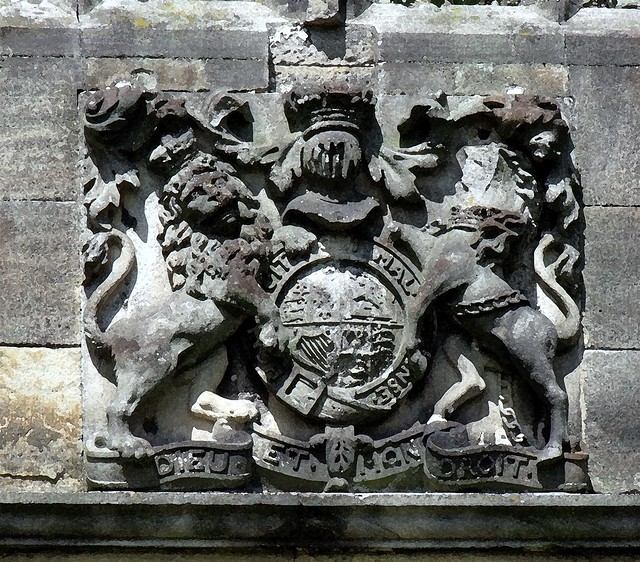
Gibside was owned by the Marley family from around 1200 until 1535 when it was passed by marriage to the Blakiston family of Coxhoe. The earliest identified building fabric is from a Jacobean country house erected by William Blakiston between 1603 and 1620. The fabric of this house can be identified by its rubble masonry construction, which is evident on the internal wall faces (the external faces were refaced in the 19th century). The west end of the hall was entered through a porch in the south front of the house. The porch was flanked on either side by two projecting window bays. Although the present internal and external doorways of the porch are aligned, the original inner doorway of the 17th century is visible offset to the west of the present doorway. The north wall of the hall has a four centred arch fireplace, which was fronted by a mantle decorated with the Blakiston coat of arms and supported by two figures, Hercules and Samson (now installed at Glamis Castle). The west end of the hall was divided from service areas to the west by a screens passage running from the entrance porch to a doorway in the north wall. Immediately west of the screens passage was the buttery. Further west were the kitchens, although these were demolished during later phases of the house and nothing is now visible. To the north of the buttery are three doorways with plain chamfered frames. They have lower heads than the doorway at the north end of the screens passage and they would have led into further service rooms with lower ceilings than the rooms to the south. The doorway at the north of the screens passage led into a stair compartment, which in turn allowed access east into a courtyard. The courtyard was surrounded to the east, south and west sides by ranges of the 17th century country house. To the east of the hall are two rooms and a passage. The room immediately east of the hall is of a similar width to the stair compartment to the north of the screens passage and may have also contained a stair. Running east from this is a passage, which was created by building works after 1767, as a plan of this date shows the building extending further south than its present extent. The north wall of this passage and the room to the north (parlour) are part of Blakiston House. The surviving floor beams of the parlour have mortices for closely set joists of a square section, characteristic of an earlier period of building and this room may represent the `new' parlour mentioned in an inventory of 1608. The great chamber of the 17th century house was situated on the first floor, the relieving arch of its fireplace surviving above the fireplace of the hall. The chimneystack of these two fireplaces, which was corbelled out over the south side of the courtyard, has been removed and also installed at Glamis Castle.
The 17th century country house was three storeys high; an illustration of the house in the 18th century shows it at this height with a pitched roof. A surviving floor beam at second floor level in the north wall above the parlour has mortices which indicate a double joisted floor. Works on the house in the 18th century are characterised by the extensive use of brick on internal faces of walls. George Bowes (the owner of Gibside Hall from 1722 to 1760) had the kitchen of the 17th century country house (situated on the west end of the hall) demolished and a new kitchen built projecting south from the east end of the passage which led from the hall to the new service rooms on the east of the hall.
The north wall of the 17th century country house was rebuilt and the courtyard enclosed to create a further room. The one surviving octagonal form of glazing bars to the windows of the north front is characteristic of the middle of the 18th century. He also added a range of service rooms onto the east of the house, which were later remodelled between 1773 and 1776 by the then owner John Lyon to form a range of service rooms around a courtyard. Some of these alterations have been attributed to the architect James Paine, who was also employed to design Gibside chapel.
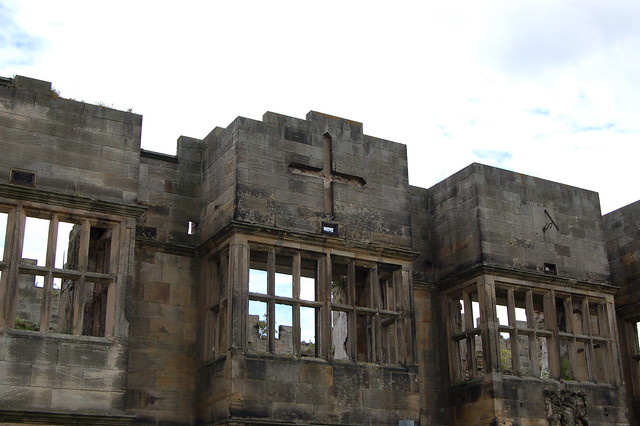
In the first decade of the 19th century the house was reduced from three to two storeys and two window bays were added to the south front on either side of the existing window bays of the 17th century house. The whole house was faced with ashlar and tall battlements with large, blind cross loops were added to the tops of the wall. Further work at Gibside was planned but never started, such as a design for a conservatory on the west end of the house which was drawn by John Dobson in 1814; the west end wall of the standing house is featureless and a recess on its internal face would have provided a door access to the conservatory. After the death of the 10th Earl's widow in 1860 the house was seldom occupied by his successors. Land army girls were billeted at the house in World War I. The house was gutted in 1920 and has been ruinous since then. It is Listed Grade II* and is situated within land designated Grade I in the Register of Parks and Gardens of Historic Interest.



from https://historicengland.org.u…
Gibside Hall, 17th to 19th century country house - Scheduling
- Country houses of the late Tudor and early Jacobean period comprise a distinctive group of buildings which differ in form, function, design and architectural style from country houses of both …
Added by
Simon Cotterill

from https://historicengland.org.u…
Gibside Hall, 17th to 19th century country house - Scheduling
- Country houses of the late Tudor and early Jacobean period comprise a distinctive group of buildings which differ in form, function, design and architectural style from country houses of both …
Added by
Simon Cotterill