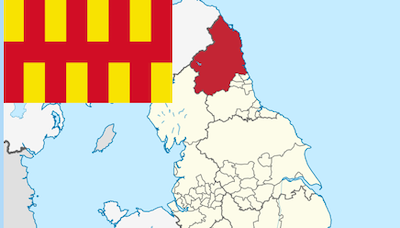
Topics > Northumberland > Civil Parishes in Northumberland > Edlingham Civil Parish > Alnwick Moor bell pits
Alnwick Moor bell pits
Scheduled Monument area - based on Historic England data (Open Government Licence).
On Alnwick Moor, north-east of Edlingham in Northumberland, are the remains of over 100 bell pits of 16th-17th century origin. They cover a wide area of about 35 hectars. This is one of the largest concentrations of shaft mounds in the North East. This type of small scale mining played an important role in the development of early industrial concerns, and were a factor in the beginning of the Industrial Revolution. Shaft mounds of varying sizes can be seen across the area, some now filled with water, and there are also remains of associated gin circles (horse-powered systems to pull the coal up to the surface) and buildings, which are preserved as low earthworks. The site is a Scheduled Monument (legally protected).

Illustration of a small bell pit.
Scheduled Monument (#1006419): Alnwick Moor bell pits
Click the headings below to expand (selected extracts from the Historic England scheduling)
The coal workings 500m south east of Corby’s crags are well-preserved and represent one of the largest concentrations of shaft mounds in the north east of England. This type of local workings played an important part in the development of early small industrial concerns and was a factor in the beginning of the Industrial Revolution. The monument will contain archaeological deposits relating to the use of the site including the shafts and their surrounding platforms, spoil heaps, other pit top arrangements and any underground galleries extending from the pits.
The monument includes the remains of at least 100 pits and shafts of 16th-17th century date, spread over an area of about 35ha. on Alnwick Moor. The shafts were originally used for quarrying coal from the Scremerston coal measures and are of varying sizes. Some shafts are surrounded by collars of spoil forming shaft mounds and between them are the remains of associated gin circles and buildings which are preserved as low earthworks.

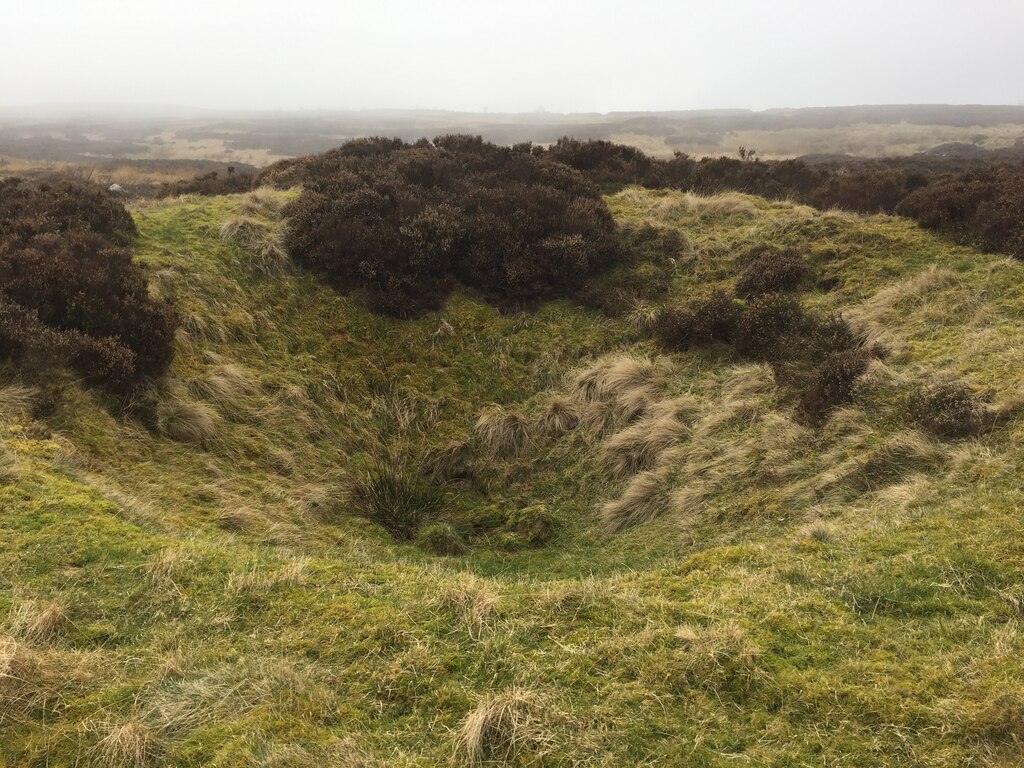
from https://www.geograph.org.uk/p…
Bell Pit
- There are dozens of these bell pit remains randomly scattered across this rather bleak moorland. They vary significantly in size, some have pronounced spoil rings, many of them are water …
Added by
Simon Cotterill
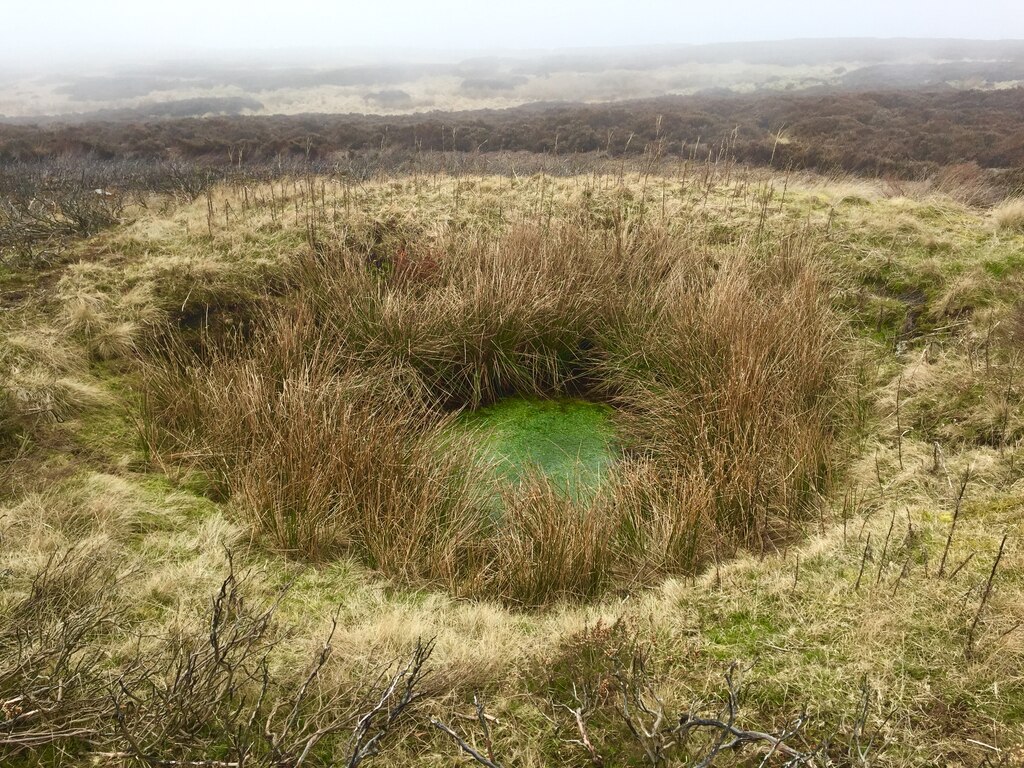
from https://www.geograph.org.uk/p…
Bell pit
- There are dozens of these bell pit remains randomly scattered across this rather bleak moorland. They vary significantly in size, some have pronounced spoil rings, many of them are water …
Added by
Simon Cotterill

from https://historicengland.org.u…
Alnwick Moor bell pits - Scheduling
- ...The monument includes the remains of at least 100 pits and shafts of 16th-17th century date, spread over an area of about 35ha. on Alnwick Moor. The shafts were originally …
Added by
Simon Cotterill

from https://www.geograph.org.uk/p…
Bell Pit
- There are dozens of these bell pit remains randomly scattered across this rather bleak moorland. They vary significantly in size, some have pronounced spoil rings, many of them are water …
Added by
Simon Cotterill
from https://www.geograph.org.uk/p…
Bell pit
- There are dozens of these bell pit remains randomly scattered across this rather bleak moorland. They vary significantly in size, some have pronounced spoil rings, many of them are water …
Added by
Simon Cotterill
from https://historicengland.org.u…
Alnwick Moor bell pits - Scheduling
- ...The monument includes the remains of at least 100 pits and shafts of 16th-17th century date, spread over an area of about 35ha. on Alnwick Moor. The shafts were originally …
Added by
Simon Cotterill