Topics > Tyne and Wear > Gateshead > Highfield > Whinfield coking ovens (1861 - 1958)
Whinfield coking ovens (1861 - 1958)
Scheduled Monument areas - based on Historic England data (Open Government Licence).
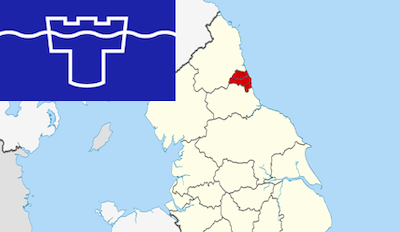
The site of Whinfield coking ovens is located on the east side of what is now Whinfield Industrial Estate, near the Highfield area of Gateshead.
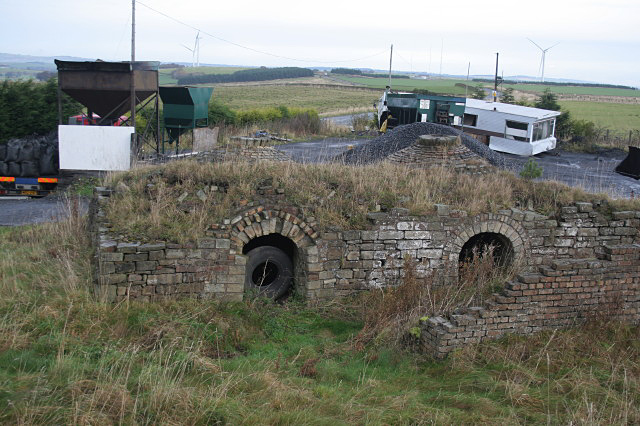
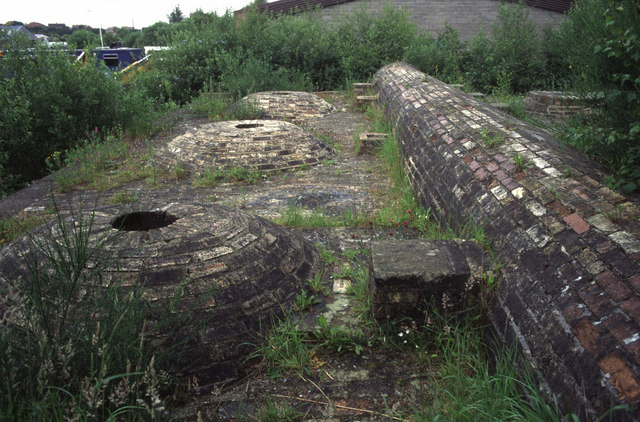
The Durham Coalfield produced rich, high-quality coal ideal for producing coking coal used in steelmaking. Beehive kilns were the first successful system of making coke with Durham coal. The Whinfield coking ovens were built in 1861 by the owners of Victoria Garesfield Colliery. It was a large-scale site, with 193 beehive coke ovens. They were in operation up to 1958, at which time they were the last working beehive coke ovens in Britain. The site includes five complete and two partial ovens, as well as buried remains. The site is a Scheduled Monument (legally protected).
Scheduled Monument (#1018226): Whinfield coking ovens, 850m south east of Low Spen Farm
Click the headings below to expand (selected extracts from the Historic England scheduling)
Coking is the process by which coal is heated or part burnt to remove volatile impurities and leave lumps of carbon known as coke. Originally this was conducted in open heaps, sometimes arranged on stone bases, but from the mid- 18th century purpose built ovens were employed. By the mid-19th century two main forms of coking oven had developed, the beehive and long oven, which are thought to have been operationally similar, differing only in shape....
All surviving pre- 1815 ovens are considered to be of national importance and merit protection, as do all surviving examples of later non-beehive ovens. The survival of beehive ovens is more common nationally and a selection of the better preserved examples demonstrating the range of organisational layouts and regional spread is considered to merit protection.
The remaining Whinfield beehive coke ovens survive particularly well and represent a rare example of intact beehive ovens, a design pioneered within the Durham coalfield. The structure of the ovens includes many original features which illustrate the technology employed in a large scale commercial coke works from the mid-19th century to the late 1950s. In addition, the site represents part of the last beehive coke works to be operated in Britain
The monument is situated 850m south east of Low Spen Farm, on the west side of Rowlands Gill, and includes the structural and buried remains of seven mid- 19th century beehive coke ovens. The area forms part of what was once a far more extensive former coal mining landscape which is now largely cleared and landscaped.
The Whinfield coke works were built in 1861 by the Trustees of the Victoria Garesfield Colliery. Garesfield Colliery was formerlly situated to the west of the monument. This colliery no longer survies and is not included in the scheduling. The Victoria Garesfield coke ovens (later the Whinfield works) originally consisted of a bank of 193 beehive coke ovens and were built primarily to produce coke from high quality coals from the Victoria Garesfield and Watergate Collieries.
The coal produced a coke that was ideal for the malleable iron founding industry of County Durham. It continued to operate until 1958 when the cost of brick production (ovens require constant maintenance including the replacement of bricks) and the demise of suitable coal reserves led to its closure. Part of the original works was preserved by the National Coal Board, and restored in the 1980s.
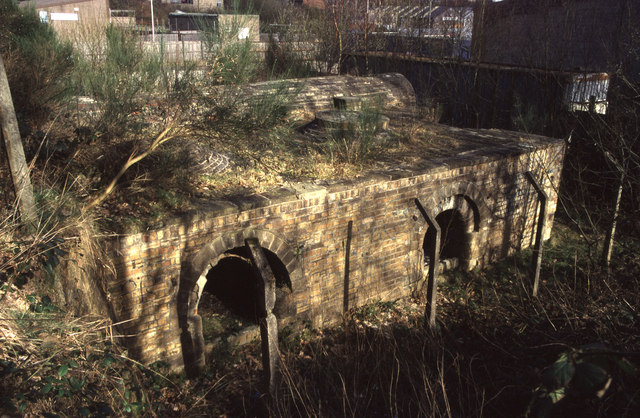
The monument includes the remains of seven well preserved beehive ovens forming the western end of the original bank of 193 ovens. Five of the ovens are complete and the profiles of two further ovens survive in the east end, providing a valuable illustration of beehive coke oven construction, and in particular the way in which the floor of the ovens was angled towards the doors to assist unloading.
A series of circular holes, measuring 0.38m in diameter and situated in the roofs of the ovens, allowed top loading from wagons conveyed on a 1.14m gauge railway above the ovens. The remains of the stone piers used to support the rails survive either side of a central arched flue. The oven doorways, five of which survive intact, have round brick arches supported by larger brick abutments. All five doorways are open though they would have been bricked up and sealed with daub during firing. Vent pipes surviving in the top of the arches were used to regulate the supply of air into the oven and were also used to observe the progress of combustion. Hot air from the ovens was directed through a small flue at the rear of the ovens into the main central flue. From 1915 the hot air from the flue was used to raise steam for electricity generation for use in a cuprous oxide plant located near to the works. The plant has been demolished and its site is not included in the scheduling, but a short length of partially blocked arch running from the flue at the north west corner of the monument is believed to relate to this later activity and is included.

from https://historicengland.org.u…
Whinfield coking ovens, 850m south east of Low Spen Farm - Scheduling
- ....Coking is the process by which coal is heated or part burnt to remove volatile impurities and leave lumps of carbon known as coke. Originally this was conducted in open …
Added by
Simon Cotterill
from https://twsitelines.info/SMR/…
Whinfield Coke Ovens
- Durham beehive kilns were the first successful system of making coke with Durham coal and these ones, built in 1861 at the Marquess of Bute's Victoria Garesfield Colliery, worked until …
Added by
Simon Cotterill

from https://historicengland.org.u…
Whinfield coking ovens, 850m south east of Low Spen Farm - Scheduling
- ....Coking is the process by which coal is heated or part burnt to remove volatile impurities and leave lumps of carbon known as coke. Originally this was conducted in open …
Added by
Simon Cotterill
from https://twsitelines.info/SMR/…
Whinfield Coke Ovens
- Durham beehive kilns were the first successful system of making coke with Durham coal and these ones, built in 1861 at the Marquess of Bute's Victoria Garesfield Colliery, worked until …
Added by
Simon Cotterill