Topics > Heritage Sites > Hadrian's Wall > Wall Mile 65
Wall Mile 65
Hadrian's Wall - Wall Mile 65
Hadrian's Wall stretches from the east to west coast of England and was an important frontier of the Roman Empire. Building of the wall began in AD 122 and took six years to complete it’s 84 mile (80 Roman mile) length. Soldiers were garrisoned along the line of the wall in large forts, smaller milecastles, and intervening turrets. The Vallum, a large ditch with mounds on either side, ran along the south side of the wall, protecting the rear of the frontier. Hadrian's Wall was designated as a World Heritage Site in 1987.
Wall mile 65 was originally a turf wall, later replaced by stone. From Milecastle 49 to the western end of Hadrian's Wall on the Solway Firth, the wall was originally constructed from turf, possibly due to the absence of limestone. Subsequently, the turf wall was demolished and replaced with a stone wall.
Wall Mile 65:
- Milecastle 65 (Tarraby) - no visible surface remains
- Turret 65A - exact location unknown
- Turret 65B - exact location unknown
- Stanwix Roman Fort (Uxelodunum)
The wall survives as buried remains in Mile 65, as does Milecastle 65, located to the west of Tarraby. To the south, a short section of the Vallum can be seen in the fields, running parallel to the B6264 road. Stanwix (Uxelodunum), located in modern day Carlisle, is thought to have been the largest fort on Hadrian's Wall, excavations suggesting that it extended over an area of 3.96 hectars.
Scheduled Monument (#1017946): Hadrian's Wall between Tarraby and Beech Grove, Knowefield in wall miles 64 and 65
Click the headings below to expand (selected extracts from the Historic England scheduling)
Map showing the buried remains of Hadrian's Wall in this section.
%
Hadrian's Wall survives throughout this length solely as buried remains with no visible remains of the Wall itself above ground. The ditch to the north of the Wall is however visible as a broad shallow depression up to 10m wide and 0.3m deep. The remains of the Wall and ditch were confirmed to survive as buried remains by excavations carried out by Smith in 1976. Up to two courses of the foundations of the Wall together with core were found to survive. There were no remains however of the preceding Turf Wall apart from dispersed turf traces south of the Wall. The 1976 excavations established that there had been pre-Roman cultivation at Wall Knowe, which was shown by a grid of drainage ditches, one of which had been infilled where the Wall crossed it.
The position of Milecastle 65 has been confirmed by geophysical survey followed by a trial excavation at its south west corner in 1976 by Smith and Austen. It is situated on the westward-facing slope 150m west of Tarraby. At least two courses of foundations were found to survive in situ, and the geophysical survey indicated that internal floor or road cobbling survives as buried remains. In plan the milecastle appears to be of `short axis' type, where its length north-south is shorter than its width east-west.
There are no upstanding remains of the milecastle above ground and it survives wholly as a buried feature. A Roman altar dedicated to the native god Cocidius who was equated with the Roman god of war, Mars, was found in 1804 when a drain was cut across the line of the Wall 50m east of Milecastle 65, and is now in the Tullie House Museum.
The precise location of turret 65a has not yet been confirmed but on the basis of the usual spacing it is anticipated that it will survive as a buried feature near the crest of Wall Knowe, 250m east of Beech Grove. It is expected to be a Turf Wall-type turret, with four walls, the southern one containing a doorway built into the full width of the Turf Wall and later abutted at each side by the replacement Stone Wall.
The course of the Roman road, known as the Military Way, which ran the length of the Wall corridor connecting forts, milecastles and turrets has not been confirmed in this section. However a metalled road up to 10m wide was identified in the excavations by Smith in 1976 south of and close to the line of the Wall. This road was in use in the medieval period and is shown on a map of 1610, but it may have followed the line of the Roman Military Way, spreading with continued use. This road survives as buried remains.
A dump of clay up to 0.6m deep, laid over an earlier ground surface and sealing plough marks and a military ditch, extending across the dip in the land immediately east of the fort at Stanwix has been interpreted as the parade ground of the fort, which at the height of its use nominally contained 850 auxiliary cavalrymen. The parade ground, which was discovered during excavations in 1992 and 1993 by Carlisle Archaeological Unit, had a cobbled surface. The feature survives below the turf cover as buried remains except for the small area removed in the 1992 excavations.
Scheduled Monument (#1017947): Hadrian's Wall vallum between the boundaries north of the properties on Whiteclosegate and the field boundary west of Wall Knowe in wall miles 64 and 65
Click the headings below to expand (selected extracts from the Historic England scheduling)
Map showing the buried remains of Hadrian's Wall vallum in this section.
%
The vallum in this length runs through open fields on the south side of Wall Knowe, approximately 160m south of Hadrian's Wall. The line of the vallum ditch is visible in the eastern part of this section as a broad depression 10m wide and 0.5m deep. The vallum's banks have been reduced and dispersed by cultivation in the past and survive as buried remains.
Scheduled Monument (#1017948): Hadrian's Wall and vallum between the field boundary west of Wall Knowe and Scotland Road including the Roman fort at Stanwix in wall mile 65
Click the headings below to expand (selected extracts from the Historic England scheduling)
The monument includes the section of Hadrian's Wall and associated features including a significant area of the site of the Roman fort at Stanwix, and the vallum between the field boundary west of Wall Knowe in the east and the east side of Scotland Road in the west. The Wall, vallum and the fort at Stanwix are situated on the crest of a ridge on the north side of the River Eden, with extensive views to the south across the city of Carlisle towards the northern Pennines, the Eden valley, and the Lake District fells, and also with views to the north for up to 5km.
Hadrian's Wall survives as a buried feature throughout this section with no indications of the Wall or the wall ditch visible on the ground. The Wall in this section was initially built in turf, and later converted into a stone wall, possibly in the second half of the second century AD. A length of the stone-built Wall was found in excavations by Simpson in 1932 within the playground of Stanwix Primary School. An evaluation by Carlisle Archaeological Unit in 1997, also within the school playground, found a turf feature 7m to the rear of the Stone Wall, possibly remains of the primary Turf Wall. Much of the course of the Wall adjacent to the fort is covered by housing and gardens....
The precise location of turret 65b has not yet been confirmed but on the grounds of the usual spacing it is likely to have been replaced by the fort at Stanwix when the latter was constructed. It would have been constructed at the same time as the Turf Wall and would have been identical in form to other Turf Wall turrets as a square tower the same width (6m) as the Turf Wall. It has not yet been confirmed whether turret 65b was replaced by the fort before or after the replacement of the Turf Wall by the Stone Wall.
The Roman fort on the Wall at Stanwix is known from excavations which have established the extent of its defences. It is thought the fort faced east, with its long axis parallel to Hadrian's Wall. Its measurements until recently were considered to be 176m north-south by 213m east-west, arising from the evidence of the excavations by Simpson in 1932. The stone wall found was thought to have formed the north wall of the fort. Further excavations in 1940 by Simpson and Richmond on the other sides confirmed the position of the other three sides of the fort, including two parallel western ditches, the south west corner, a short length of the south wall and two fort ditches.
Part of an interval tower belonging to the south defences was found in the grounds of Stanwix House, and the east wall and a fort ditch was found where Romanby Close now runs. A linear earthwork at the southern end of the churchyard appears to reflect the line of the southern defences. Excavations in 1984 by Carlisle Archaeological Unit in the former gardens of Nos 24-28, Scotland Road, now the car park of the Cumbria Park Hotel, discovered a previously unknown north fort wall and interval tower 18m north of the wall found by Simpson, which suggests that the fort was at some time enlarged northwards, giving an overall north-south dimension of 194m. This would have made it the largest fort on Hadrian's Wall extending over an area of 3.96ha.
The garrison is known from epigraphic evidence to have been the ala Petriana, which was the only thousand-strong auxiliary cavalry unit in Britain. The Roman name of the fort was traditionally thought to be Petriana, but recent research has suggested that this name arose from a scribal error in Roman times which confused the fort's name and the occupying unit. Its true name was probably Uxelodunum, which means `high place' and suits the fort's topographically commanding position.
Details of the internal layout are only partly known. The excavations in 1932 by Simpson revealed buildings parallel to the fort's north wall although their function is unknown, and the excavations in 1940 by Simpson and Richmond in the southern part of the school yard of Stanwix Primary School revealed part of a granary and a further unknown building. The walls of the granary are currently marked in red concrete in the school playground surface. An evaluation by Carlisle Archaeological Unit in 1997 confirmed several of the features identified by Simpson, and established that the buried remains survive well up to 1.5m in depth between 0.2m and 0.4m below the playground surface. All the remains of the fort survive only as buried features with no remains visible on the ground surface.
A clay feature, interpreted as the parade ground attached to the fort, has been identified in excavations by Carlisle Archaeological Unit in 1991 and 1992 in the dip in the land east of the fort in the grounds of Cumbria College of Art. It consisted of a dump of clay up to 0.6m deep with a metalled surface which had been laid over a buried land surface containing traces of pre-Wall cultivation. This in turn had been cut by a Roman military ditch pre-dating the parade ground. The full extent of the parade ground has not yet been defined but it does not extend as far eastwards as the field boundary which marks the eastern limit of the monument and is confined by the line of Hadrian's Wall to the north and the fort to the west. The parade ground is not visible on the ground surface and survives wholly as a buried feature.
The full extent of the civil settlement, known as a vicus, belonging to the fort at Stanwix has not yet been confirmed, but it is known from excavations to have extended both to the east and west of the fort. There are no remains visible above ground and it survives entirely as buried remains. A series of ditches associated with second century AD pottery is known from excavations by Smith in 1976 on the site of Vallum Close adjacent to Brampton Road. As the remains here were totally excavated, this area is not included in the scheduling, although the area immediately to the west, south of the vallum, is included. Observations of development on the site of the former Miles McInnes Hall by Caruana in 1986 also found traces of buildings and occupation belonging to the civil settlement on the west side of the fort, dated to the second half of the the second century AD. As the remains here were totally destroyed by development, this area is also not included in the scheduling. It is possible that the civil settlement may have extended further towards Carlisle although this has not yet been confirmed. It is unlikely that the area south of the fort below the steep river cliff was occupied because of the flood plain of the river...
The cemetery belonging to the fort lay east of the fort and is known from the chance discovery of cremation urns in Croft Road in 1872 and again from the construction of houses in Croft Road in 1936. The full extent of the cemetery has not yet been confirmed and the area of these discoveries has not been included in the scheduling as the survival of remains in the built-up area has not been confirmed. There is a strong possibility that the western part of the cemetery may lie within the area of protection. Two tombstones originating from the cemetery at Stanwix have been recovered, one of Marcus Troianus Augustus and the other of a cavalryman, but both have been moved, one to Drawdykes Castle and the other to the Senhouse Museum, Maryport.
The course of the road, known as the Military Way, that ran the length of Hadrian's Wall connecting forts, milecastles and turrets has not been confirmed in this section. However a metalled road up to to 10m wide was identified in the excavations by Smith in 1976, in the adjoining scheduling to the east. This road ran south of and close to the Wall and was in use in the medieval period but it may have followed the line of the Military Way, the line being spread with continued use. The deviation of Tarraby Lane from the line of the Wall west of Wall Knowe to run straight towards the probable position of the east gate of the fort would suggest that it follows the line of the Military Way. The line of the road on the west side of the fort has not yet been identified. Military Way is not visible on the ground and it survives as a buried feature. The course of the vallum is known at either end of the monument from excavations.
The vallum was located by excavation 100m east of Dykes Terrace by Simpson in 1932, and again immediately west of Dykes Terrace in excavations by the English Heritage Central Excavation Unit under Smith in 1976. Excavation in Rickerby Park by Simpson in 1934 has confirmed the course of the vallum west of the fort, including the turn of the ditch towards Hadrian's Wall before it descends Stanwix Bank towards the river. The course of the vallum was unsuccessfully sought south of the fort in excavations by Simpson in 1933 and 1934, when a ditch that was found and initially thought to be the vallum ditch turned out to be the south ditch of the fort. The course of the vallum south of the fort has not yet been confirmed although it is possible that erosion of the steep cliff above the river flood plain may have resulted in loss of some of the vallum south of the fort.



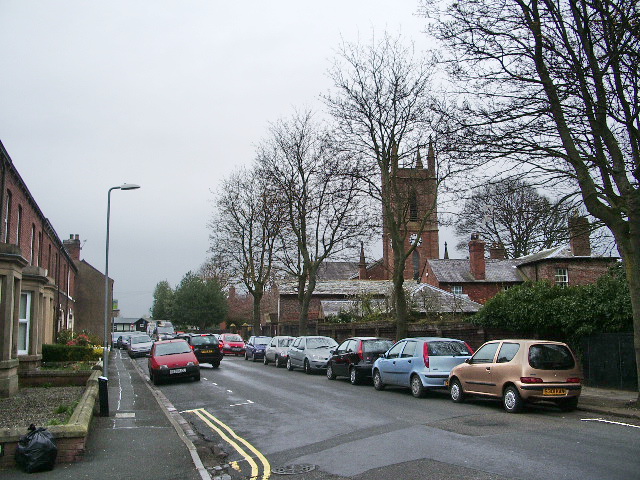

from https://historicengland.org.u…
Hadrian's Wall and vallum between the field boundary west of Wall Knowe and Scotland Road including the Roman fort at Stanwix in wall mile 65 - List Entry
- ....Hadrian's Wall and its associated features between the field boundary west of Wall Knowe and Scotland Road survive well as buried remains and will contain significant information on the development …
Added by
Simon Cotterill
from https://historicengland.org.u…
Hadrian's Wall between Tarraby and Beech Grove, Knowefield in wall miles 64 and 65 - List Entry
- ...Hadrian's Wall and its associated features between Tarraby and Beech Grove, Knowefield, survive well as buried remains and will contain significant information on the development of the frontier system over …
Added by
Simon Cotterill
from https://historicengland.org.u…
Hadrian's Wall vallum between the boundaries north of the properties on Whiteclosegate and the field boundary west of Wall Knowe in wall miles 64 and 65 - List Entry
- .....The section of Hadrian's Wall vallum between the boundaries north of the properties on Whiteclosegate and the field boundary west of Wall Knowe survives well as buried remains which will …
Added by
Simon Cotterill



from https://historicengland.org.u…
Hadrian's Wall and vallum between the field boundary west of Wall Knowe and Scotland Road including the Roman fort at Stanwix in wall mile 65 - List Entry
- ....Hadrian's Wall and its associated features between the field boundary west of Wall Knowe and Scotland Road survive well as buried remains and will contain significant information on the development …
Added by
Simon Cotterill
from https://historicengland.org.u…
Hadrian's Wall between Tarraby and Beech Grove, Knowefield in wall miles 64 and 65 - List Entry
- ...Hadrian's Wall and its associated features between Tarraby and Beech Grove, Knowefield, survive well as buried remains and will contain significant information on the development of the frontier system over …
Added by
Simon Cotterill
from https://historicengland.org.u…
Hadrian's Wall vallum between the boundaries north of the properties on Whiteclosegate and the field boundary west of Wall Knowe in wall miles 64 and 65 - List Entry
- .....The section of Hadrian's Wall vallum between the boundaries north of the properties on Whiteclosegate and the field boundary west of Wall Knowe survives well as buried remains which will …
Added by
Simon Cotterill