Topics > Northumberland > Hexham > Hexham Bridge
Hexham Bridge
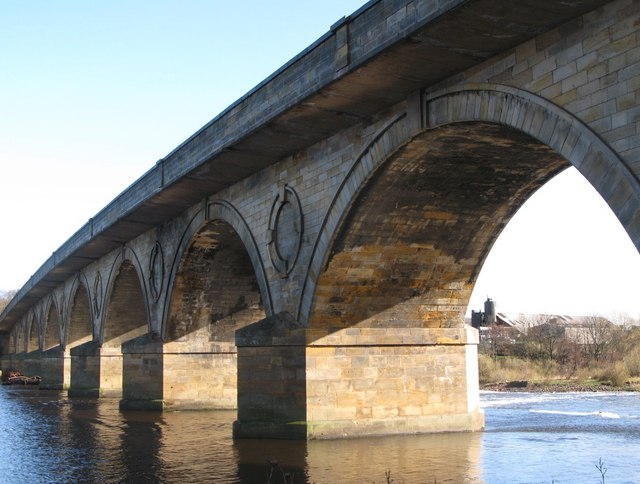
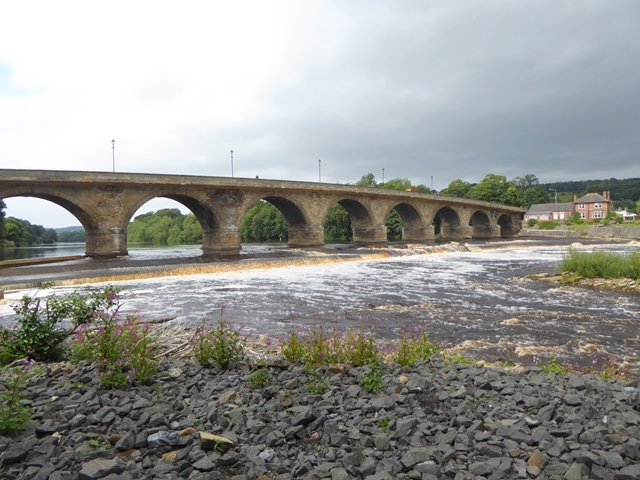
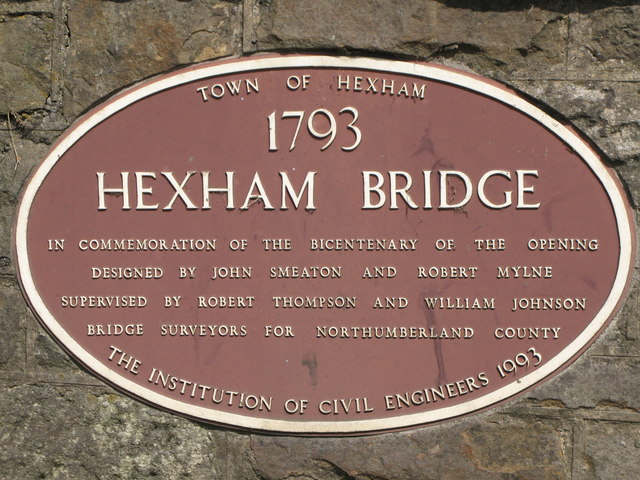
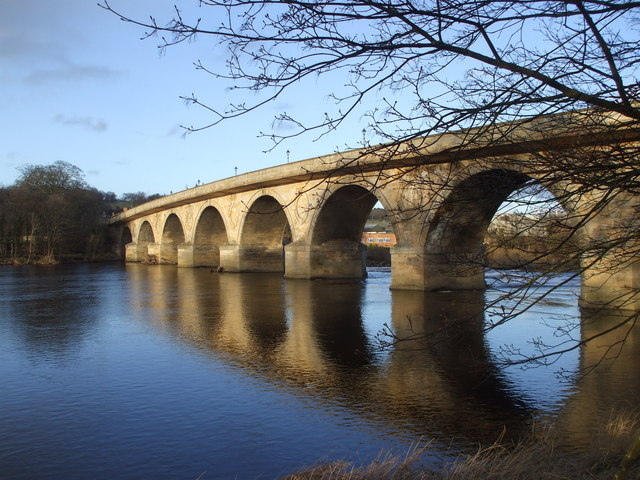
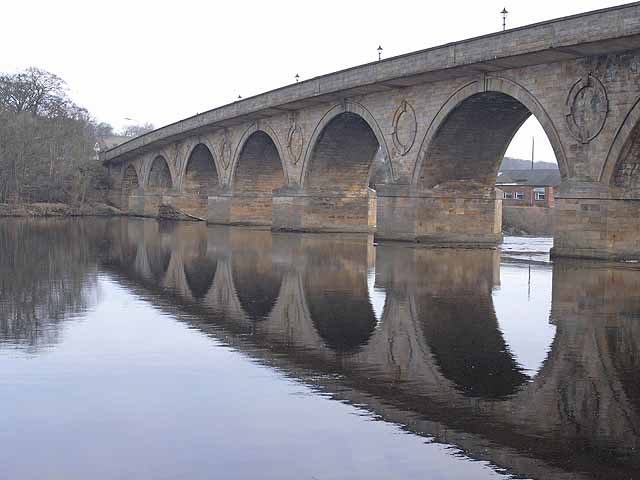
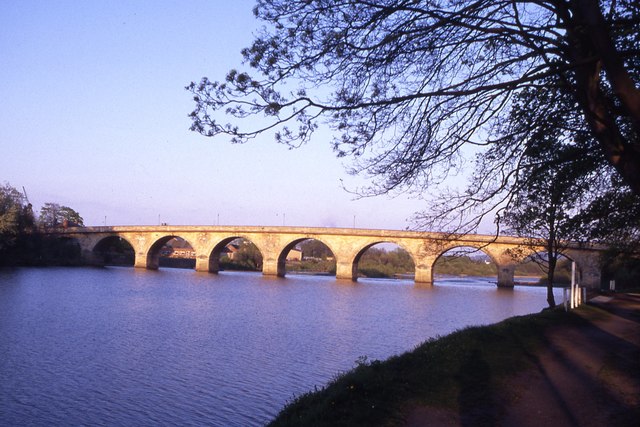
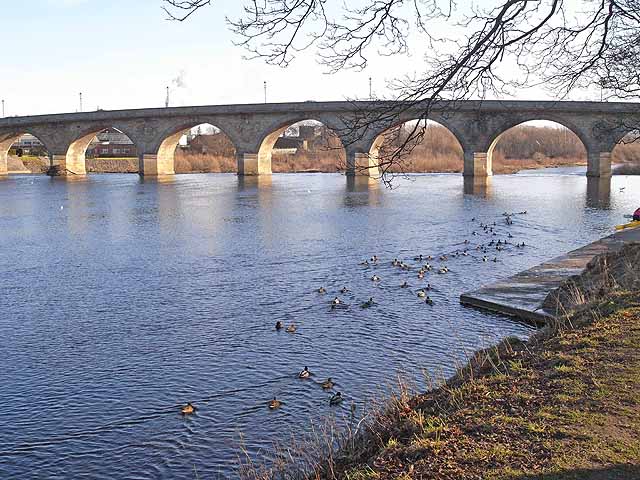
Hexham Bridge carries the A6079 road over the River Tyne at Hexham. The nine arched stone bridge was built in 1793, to the designes of John Smeaton and Robert Mylne, and carried the Alnmouth and Hexham Turnpike road. It replaced an earlier bridge, which was destroyed in the Great Flood of 1771, and was the 5th bridge built here within 30 years of each other. The bridge was widened in 1967. Hexham bridge is a Scheduled Monument and is Grade II* listed on the National Heritage List for England.
Scheduled Monument (#1002905): Hexham Bridge
Click the headings below to expand (selected extracts from the Historic England scheduling)
Hexham Bridge is an important landmark and an element of the long history of attempts to span the River Tyne at Hexham. Its construction is closely linked to development of the turnpike road and is indicative of the effects the roads had on local economy, infrastructure and communication.
The monument includes a bridge of 18th century date, which spans the River Tyne at Hexham. The bridge is constructed from tooled and margined ashlar masonry. It has nine arches of which the central arch is the widest with the remainder decreasing in width from the centre outwards. The arches are segmental with narrow chamfers and stepped keystones, except for the outermost pair which are of three-centred form with alternating rusticated voussoirs. The piers of the bridge have chamfered bases and triangular cutwaters with stepped tops below blind keyed oculi in the spandrels of the arches. The parapets have shallow pilasters above the crowns of the arches and at each end splay out to form wing walls with octagonal end piers, except on one side of the north end where the wing wall has been replaced by railings. On the east face of the northern abutment a date of 1795 is inscribed.
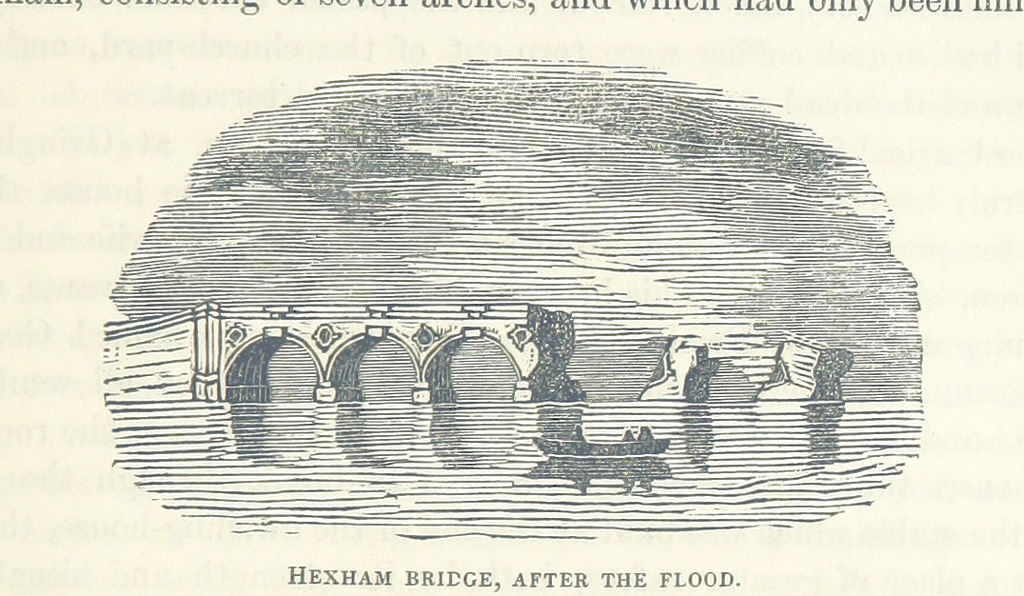
There is a long history of attempts to bridge the River Tyne at Hexham. First documentary reference to a bridge occurs in 1263 and subsequently in 1324. These bridges did not last and during the 15th and 16th centuries the main form of crossing was by ferry. The opening of the Hexham to Alnmouth turnpike in 1751 necessitated a new bridge at Hexham. A bridge of seven arches was completed in 1770 but was destroyed in the Great Flood of 1771. This bridge was replaced by a nine arch bridge built in 1780 and designed by John Smeaton, but the bridge was destroyed in winter floods in 1782. All of these previous bridges spanned the River Tyne at different points. The current bridge was built by William Johnson and Robert Thompson, following Smeaton’s previous bridge designs but with piling and other measures to improve its stability. The bridge was completed between 1793 and 1795. In 1967 the parapets were moved from their original position in order to widen the bridge to allow foot passengers.

Co-Curate Page
Great Flood of 1771
- Great Flood on the Rivers Tyne, Tees, Wear, Eden and other rivers in the region, on the 16th and 17th November 1771. On the 17th of November 1771, after torrential …

from https://historicengland.org.u…
HEXHAM BRIDGE - List Entry
- 1793. Fifth bridge built within 30 years of each other; previous ones destroyed by flood. 9 arched stone bridge designed by engineer-architect Robert Mylne. Blind oculi with 4 keystones in …
Added by
Simon Cotterill

Co-Curate Page
Great Flood of 1771
- Great Flood on the Rivers Tyne, Tees, Wear, Eden and other rivers in the region, on the 16th and 17th November 1771. On the 17th of November 1771, after torrential …
from https://historicengland.org.u…
HEXHAM BRIDGE - List Entry
- 1793. Fifth bridge built within 30 years of each other; previous ones destroyed by flood. 9 arched stone bridge designed by engineer-architect Robert Mylne. Blind oculi with 4 keystones in …
Added by
Simon Cotterill