Topics > Cumbria > Dalton-in-Furness
Dalton-in-Furness
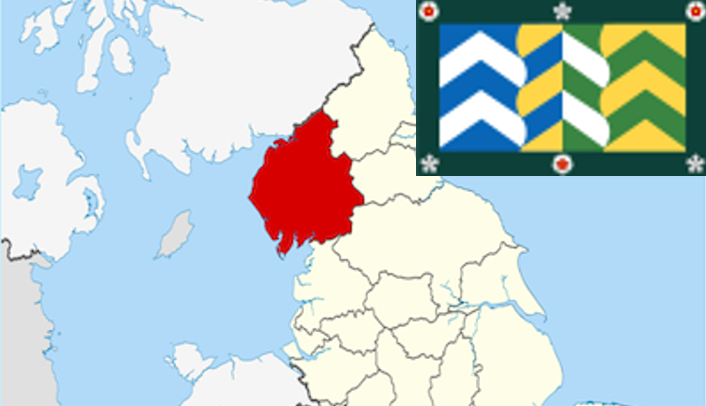
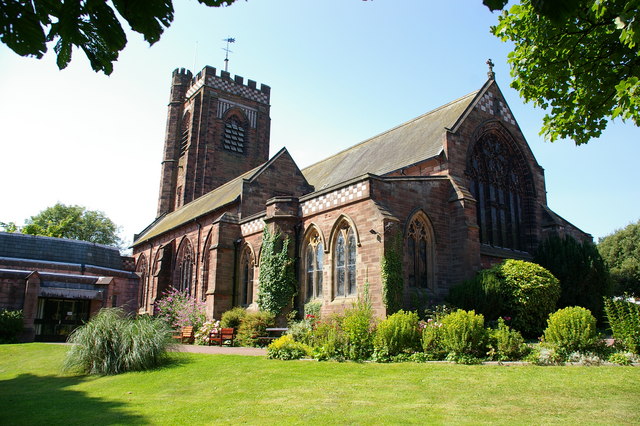
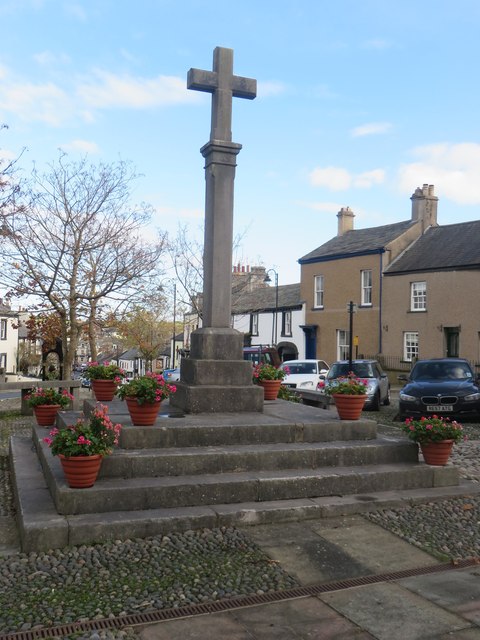
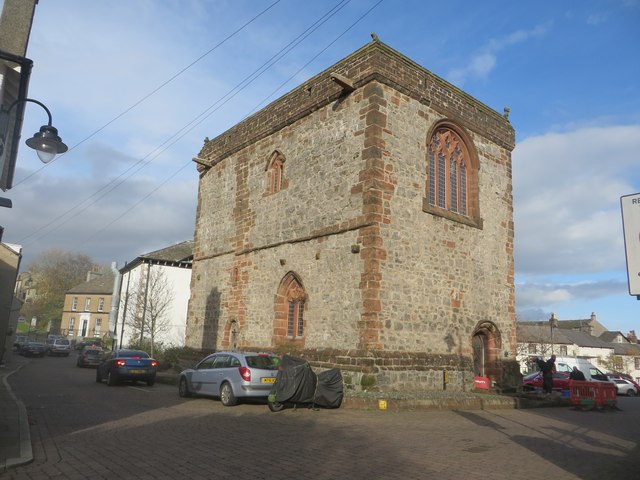
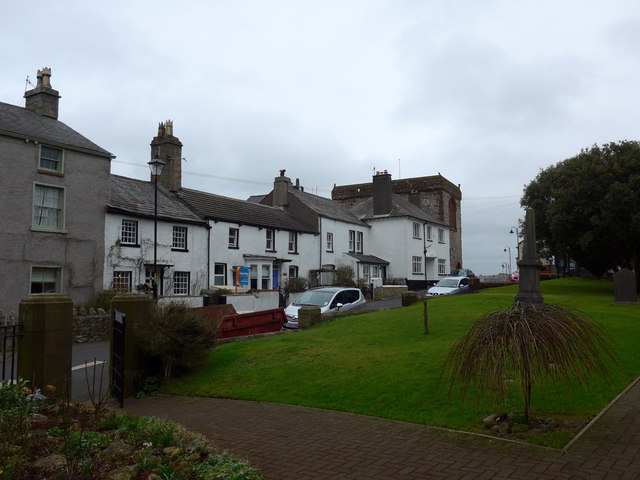
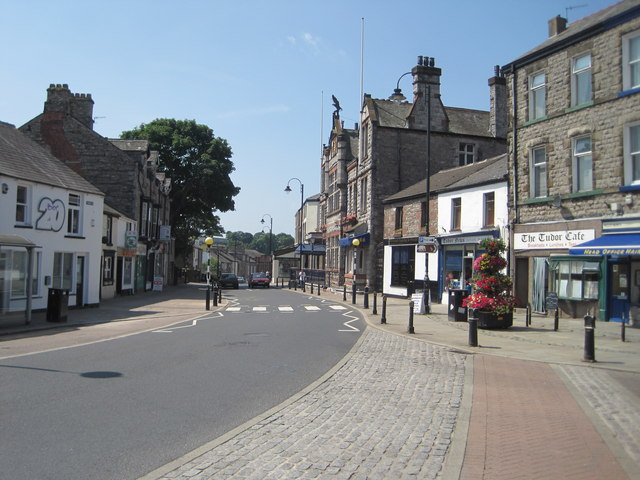
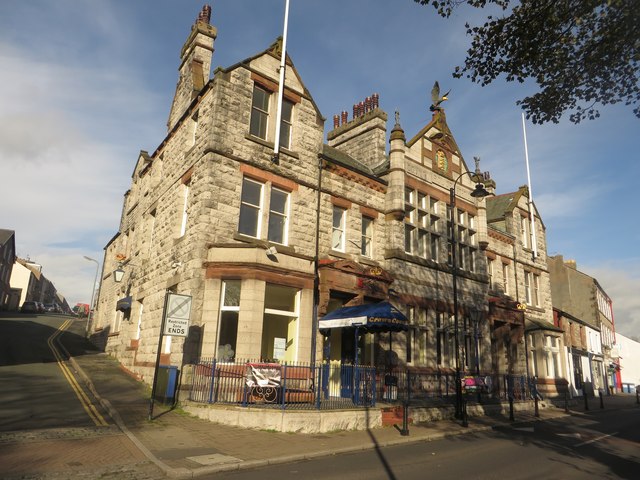
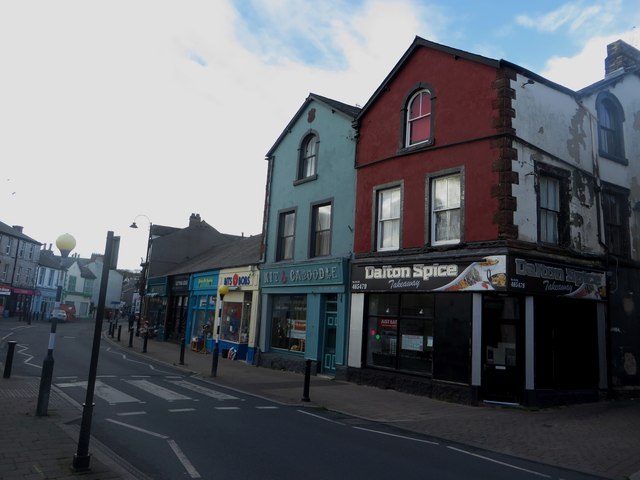
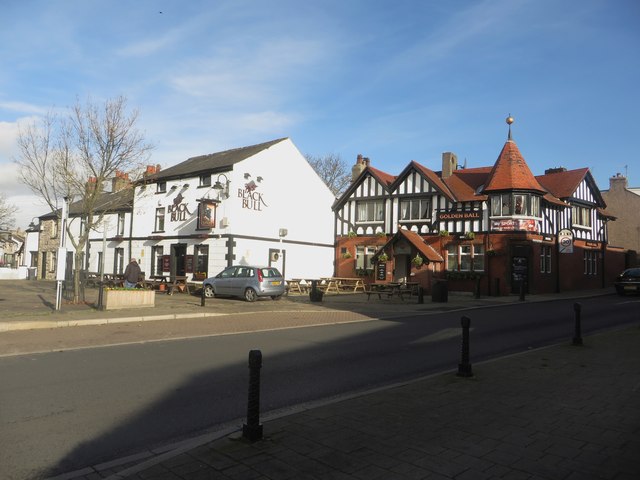
Dalton-in-Furness is a historic market town in the Furness area of the ceremonial county of Cumbria. Dalton served as the secular administrative centre and market for Furness Abbey, which was established in 1127. A market charter was granted to Dalton in 1239. Dalton Castle was built in the 14th-century to protect monks from Scottish raiders, but was later used as a courthouse and prison. St Mary's Church has a history dating back to at least 12th century, and was largely rebuilt in the 19th century. The town grew rapidly in the mid-19th century due to the expansion of the iron-mining industry, which was facilitated by the opening of the Furness Railway.
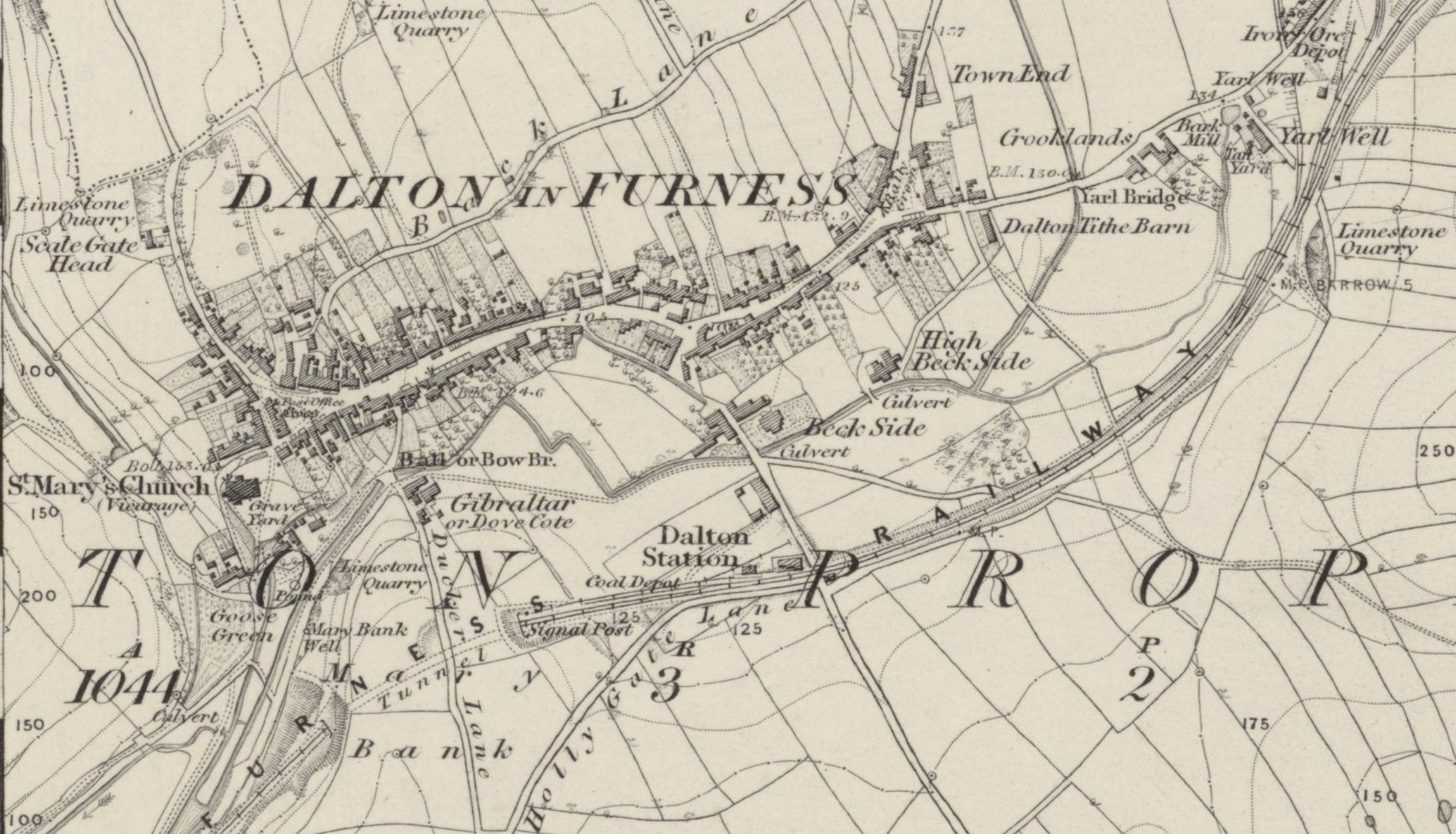
Extract from OS map Surveyed: 1846 to 1847, Published: 1850. CC-BY (NLS)
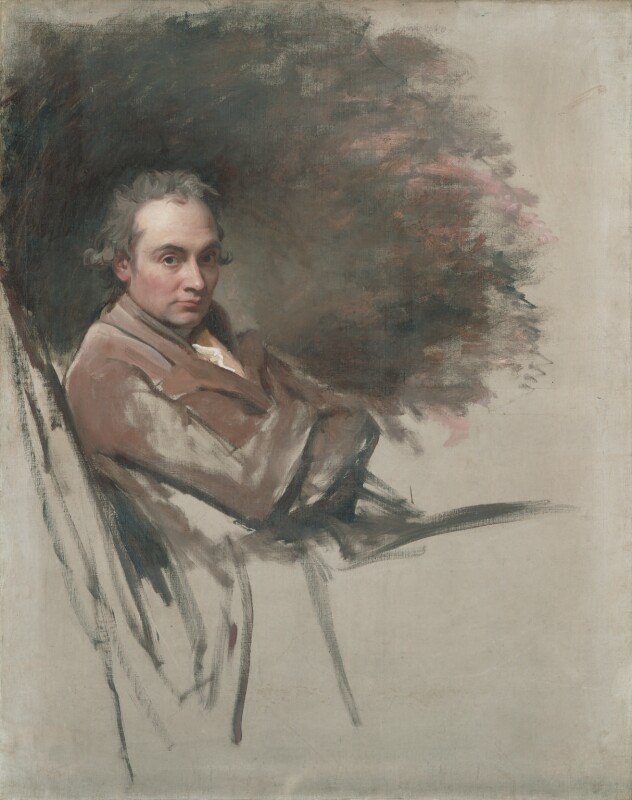
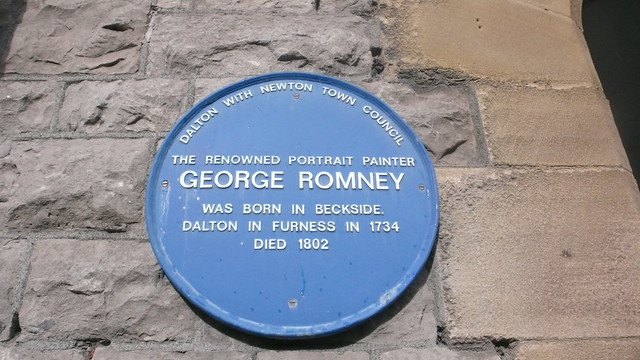
Famous people from Dalton include the 18th-century portrait painter George Romney and Margaret Fell, an early Quaker leader born here in 1614. The ancient parish of Dalton-in-Furness covered a wide geographical area, including Barrow-in-Furness, which developed in the 19th century. Today, Dalton and it's surrounding area forms part of Dalton Town with Newton Civil Parish, and falls within the Westmorland and Furness Council area.
Dalton-in-Furness is a small town of 8,125 people, north east of Barrow-in-Furness, in Cumbria, England. It is the second largest settlement in the Borough of Barrow-in-Furness after Barrow itself and is most noted for being the location of South Lakes Safari Zoo.
History
Dalton is mentioned in the Domesday Book, written as "Daltune" as one of the townships forming the Manor of Hougun held by Tostig Godwinson, Earl of Northumbria. Historically, it was the capital of Furness. The ancient parish of Dalton covered the area which is now occupied by the Borough of Barrow-in-Furness. The town is now in the civil parish of Dalton Town with Newton. Historically a part of Lancashire, the town is associated with a number of famous artists, including George Romney
Dalton Community Association (DCA) is a registered Charity No. 1076322
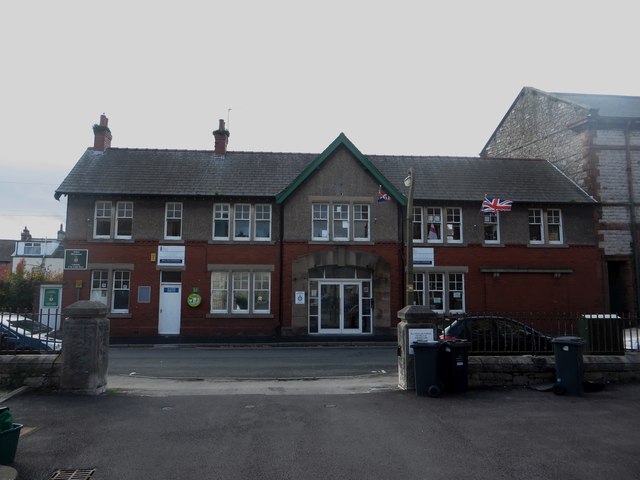
Dalton Community Association (DCA) is housed in a building known locally as Dalton Drill Hall.
The Drill Hall was officially opened in July 1929 as a Regular Army Centre for military training.
The Drill Hall was used as a military headquarter leading up to the war in 1939-45. During the war years it was a centre for the Home Guard. It had a rifle range until 2009.
After the war it was a Territorial and Army Cadet Headquarters.
In addition the Drill hall was used as an annexe to Nelson Street Junior School.
Since the early 90's it has been used as a community and youth centre.
Geography
The town is situated near the centre of Low Furness, on the eastern crest of a glaciated valley which runs obliquely across the peninsula. Just over a mile to the south lie the ruins of Furness Abbey, and four miles to the south west is the nearest major town, Barrow-in-Furness. The area is generally reached by the A590, the link road from the M6 motorway to the Furness region, which now by-passes the town, reducing the traffic flow, and enabling traffic calming measures which have proved to be rather controversial.
Dalton railway station, which serves the town, is located on the Furness Line, giving connections to Barrow, Ulverston, Grange-over-Sands and Lancaster. Also there are longer distance services to Preston and Manchester.
Dalton with Newton Town Council was the first corporate member of the Friends of Real Lancashire, an organisation dedicated to recognising the traditional county boundaries of Lancashire.
Sport
The local football teams Dalton United and Crooklands Casuals (also known as the Orangemen) play in the West Lancashire Football League.
Dalton United were recently relegated from the Premier Division to division one and Crooklands Casuals promoted from Division One to the premier league cementing their position as number one club in the town.
Girls' and women's football in the town is provided by Dalton Girls and Ladies F.C. who have junior and open age teams competing in a various cumbrian leagues.
There is also a 2 junior football clubs, Crooklands Casuals boast the larger set up with teams from under 8s through to under 16s whilst, Dalton Junior F.C. provide mini league football (under 8s, under 9s and under 10s); Dalton JFC currently plays on Dowdales School fields.
Dalton Rugby League Football Club is located at the entrance to the town on Crooklands Brow. Currently in the first division of the North West Counties League. Their ground was recently renamed Kelland Park, in memory of Dalton rugby league stalwart, Ivor Kelland.
Dalton Cricket Club plays in the North Lancs. & Cumbria Cricket League. Dalton won the first organized cricket match played in Furness, beating Barrow.
The Cricket Club also has many junior sides, such as The Under 11's & Under 13's. It also now has a table tennis club, located at the Seventh Day Adventist Church .
Education
Dowdales School is the town's secondary school with approximately 1,050 pupils. The school does not have a sixth form, but pupils transfer either to the Sixth Form College in Barrow, or to Barrow and Kendal Colleges of Further Education.
There are four primary schools in the town, Chapel Street School, George Romney Junior School, Dalton St Mary's Church of England Primary School and Our Lady of The Rosary Catholic School.
Attractions
As well as being quarter of an hour from the famous English Lake District, Dalton has a number of tourist attractions within its borders:
- Dalton Castle (National Trust)
- South Lakes Safari Zoo
Twin towns
Dalton is twinned with:
Notable residents
In 1614 Margaret Fell (also known as Margaret Fox), founder of the Religious Society of Friends (Quakers), was born in Dalton with the birth name Askew. Known popularly as the "mother of Quakerism," she is considered one of the Valiant Sixty early Quaker preachers and missionaries. She died on 23 April 1702 at age 87 or 88.
Dalton was the birthplace and early home of George Romney in the 1700s, as well as Miles Romney in the early 1800s, the latter of whom is a direct ancestor of former U.S. presidential candidate Mitt Romney.
Steve Dixon, Sky News presenter, was born in Newton-in-Furness, as was Richard T. Slone (b. 23 January 1974), an award-winning artist. Both were in the same year at school and were educated firstly in Newton and then in Dalton-in-Furness. Turner Prize winner Keith Tyson (b. 23 August 1969) grew up and attended school here as well.
Visit the page: Dalton-in-Furness for references and further details. You can contribute to this article on Wikipedia.

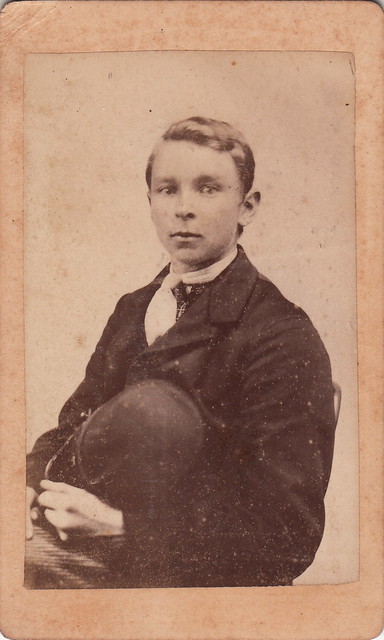
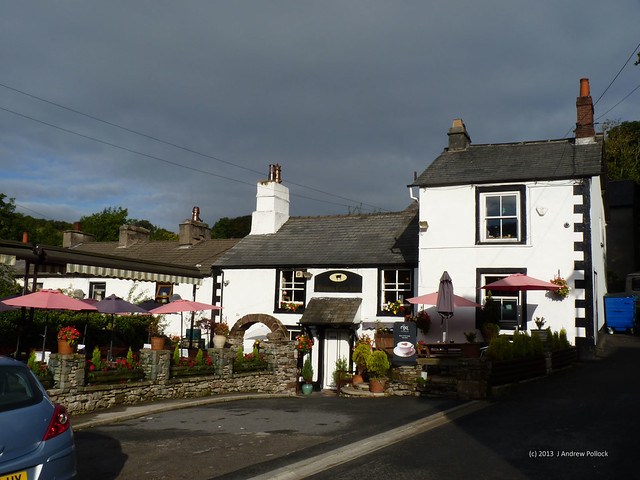
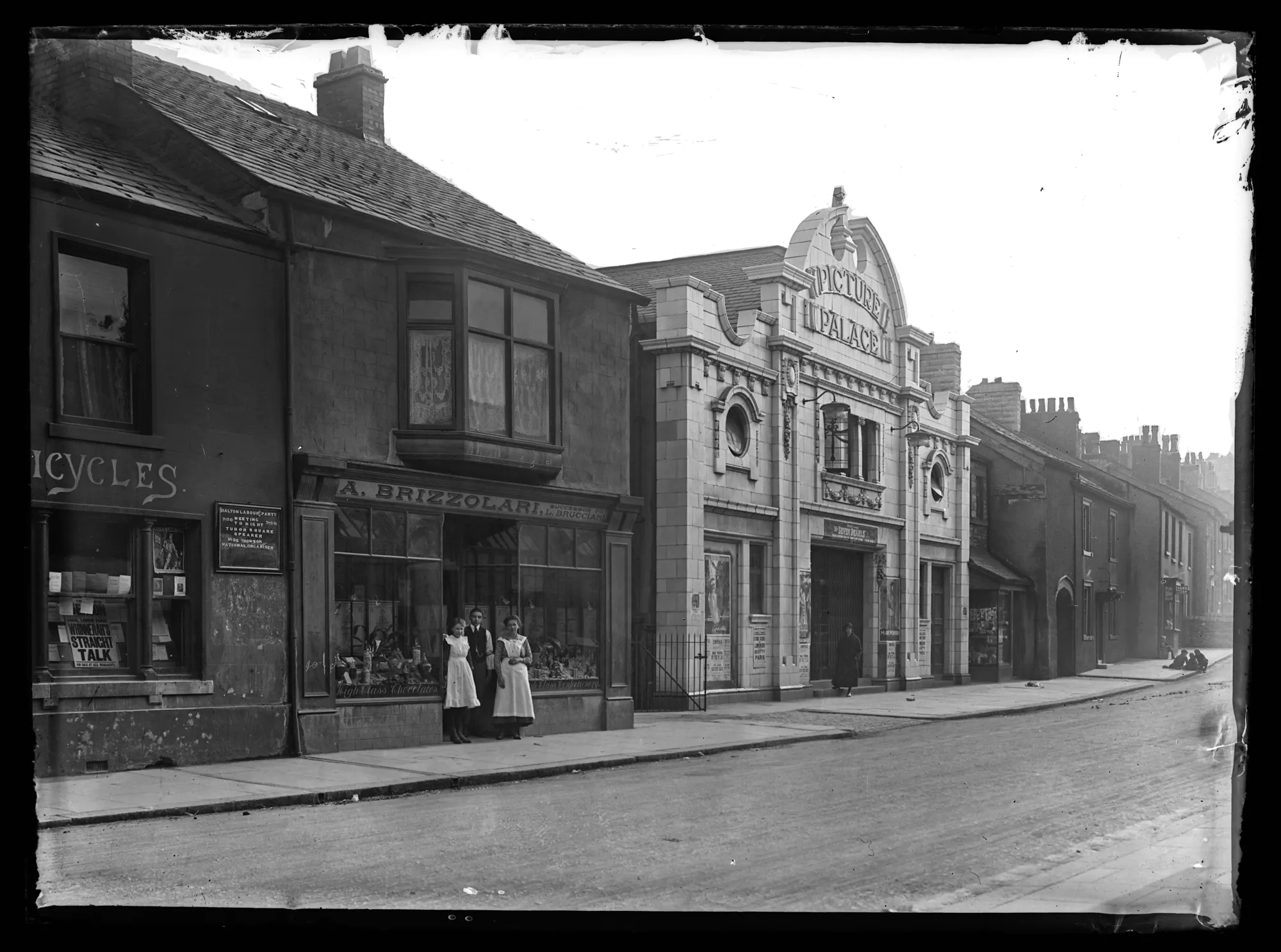
from https://www.sankeyphotoarchiv…
Picture Palace and Brizzolari's, Dalton - c.1918
- View looking west up Market Street with the elaborate white façade of the Picture Palace in the centre. Poster has it showing "The Seven Pearls”, a 1917 silent adventure film. …
Added by
Simon Cotterill

Co-Curate Page
Historic Buildings and Monuments in Dalton Town with Newton Civil Parish
- Listed buildings and scheduled monuments in Dalton Town with Newton Civil Parish, from the National Heritage List for England[1]. Use the Search (below) if looking for a specific building / …
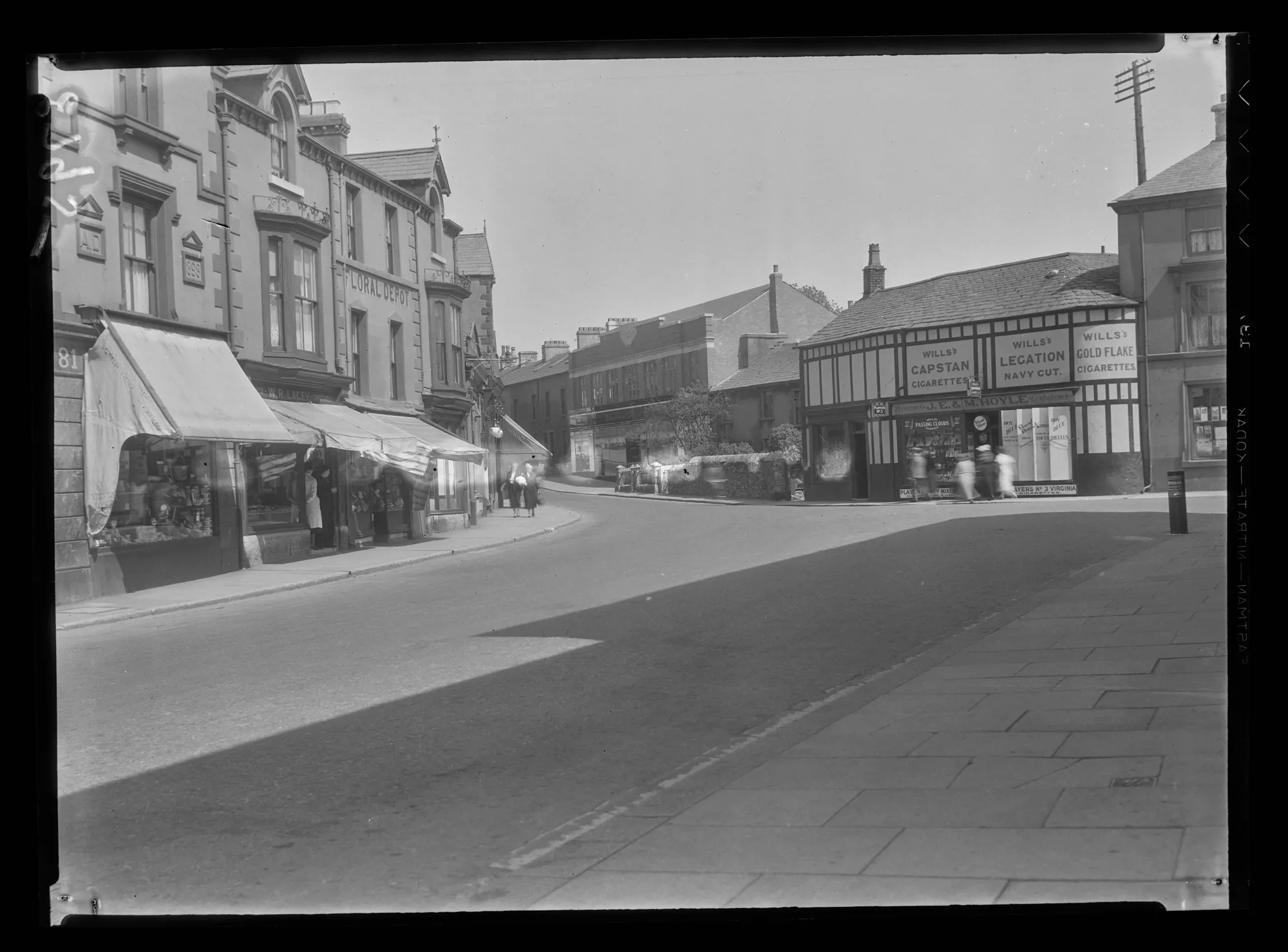
from https://www.sankeyphotoarchiv…
Market street, Dalton-in-Furness
- Early 20th century. This is wrongly titled Beach Hill by the Sankey's. It is the junction of Market Street and Station road with shops on both sides of the street. …
Added by
Simon Cotterill
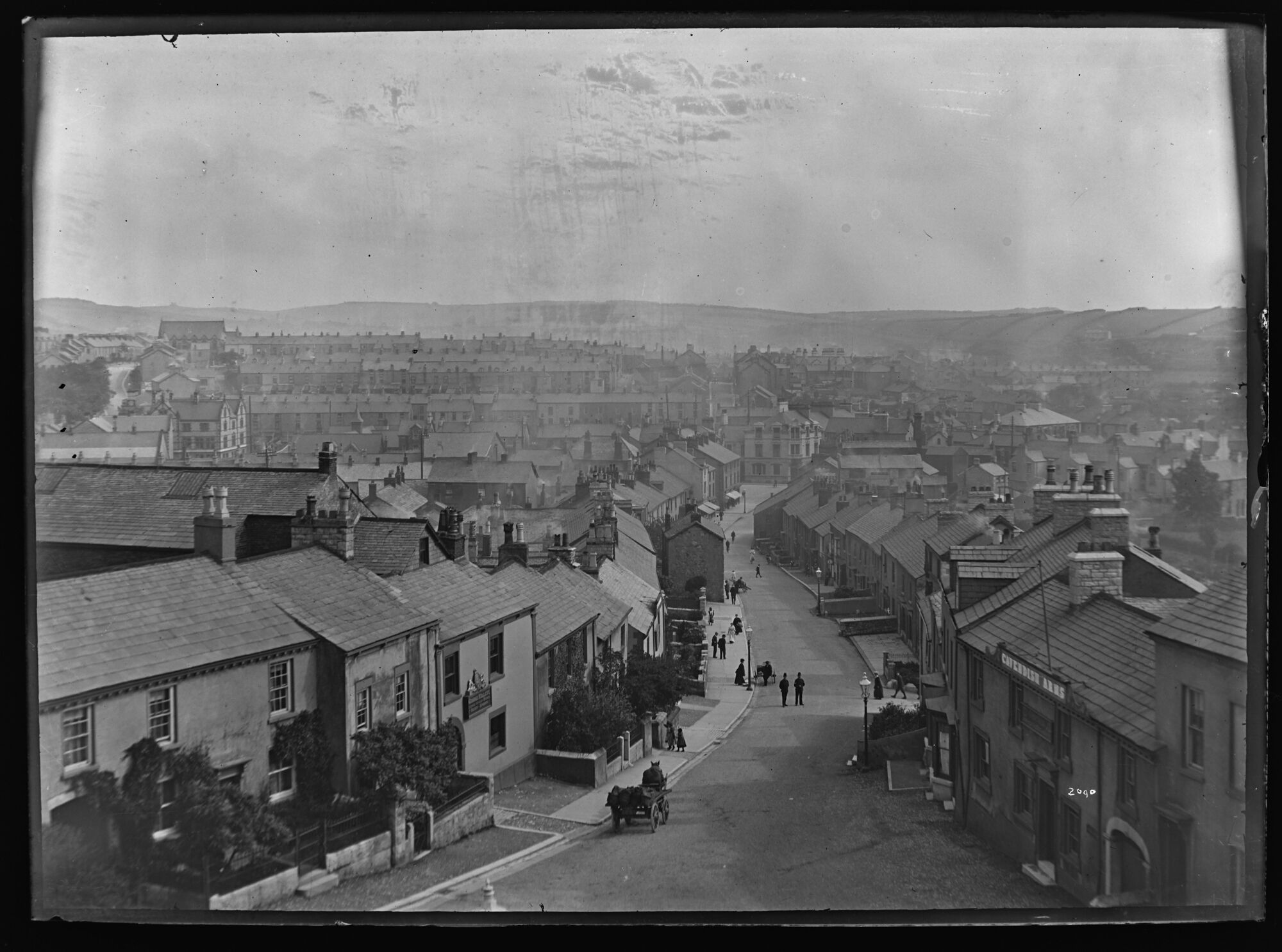
from https://www.sankeyphotoarchiv…
Dalton Viewed from Castle - 1910s
- View east from the castle tower looking over smoky roofs of the town to distant hills. Cavendish Arms is on the right and unnamed pub is opposite. Two policemen are …
Added by
Simon Cotterill

from https://www.sankeyphotoarchiv…
Picture Palace and Brizzolari's, Dalton - c.1918
- View looking west up Market Street with the elaborate white façade of the Picture Palace in the centre. Poster has it showing "The Seven Pearls”, a 1917 silent adventure film. …
Added by
Simon Cotterill
Co-Curate Page
Historic Buildings and Monuments in Dalton Town with Newton Civil Parish
- Listed buildings and scheduled monuments in Dalton Town with Newton Civil Parish, from the National Heritage List for England[1]. Use the Search (below) if looking for a specific building / …
from https://www.sankeyphotoarchiv…
Market street, Dalton-in-Furness
- Early 20th century. This is wrongly titled Beach Hill by the Sankey's. It is the junction of Market Street and Station road with shops on both sides of the street. …
Added by
Simon Cotterill
from https://www.sankeyphotoarchiv…
Dalton Viewed from Castle - 1910s
- View east from the castle tower looking over smoky roofs of the town to distant hills. Cavendish Arms is on the right and unnamed pub is opposite. Two policemen are …
Added by
Simon Cotterill