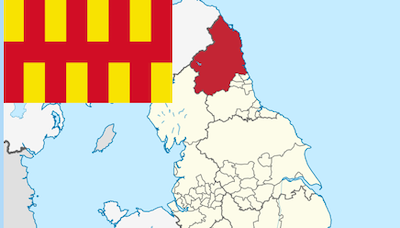
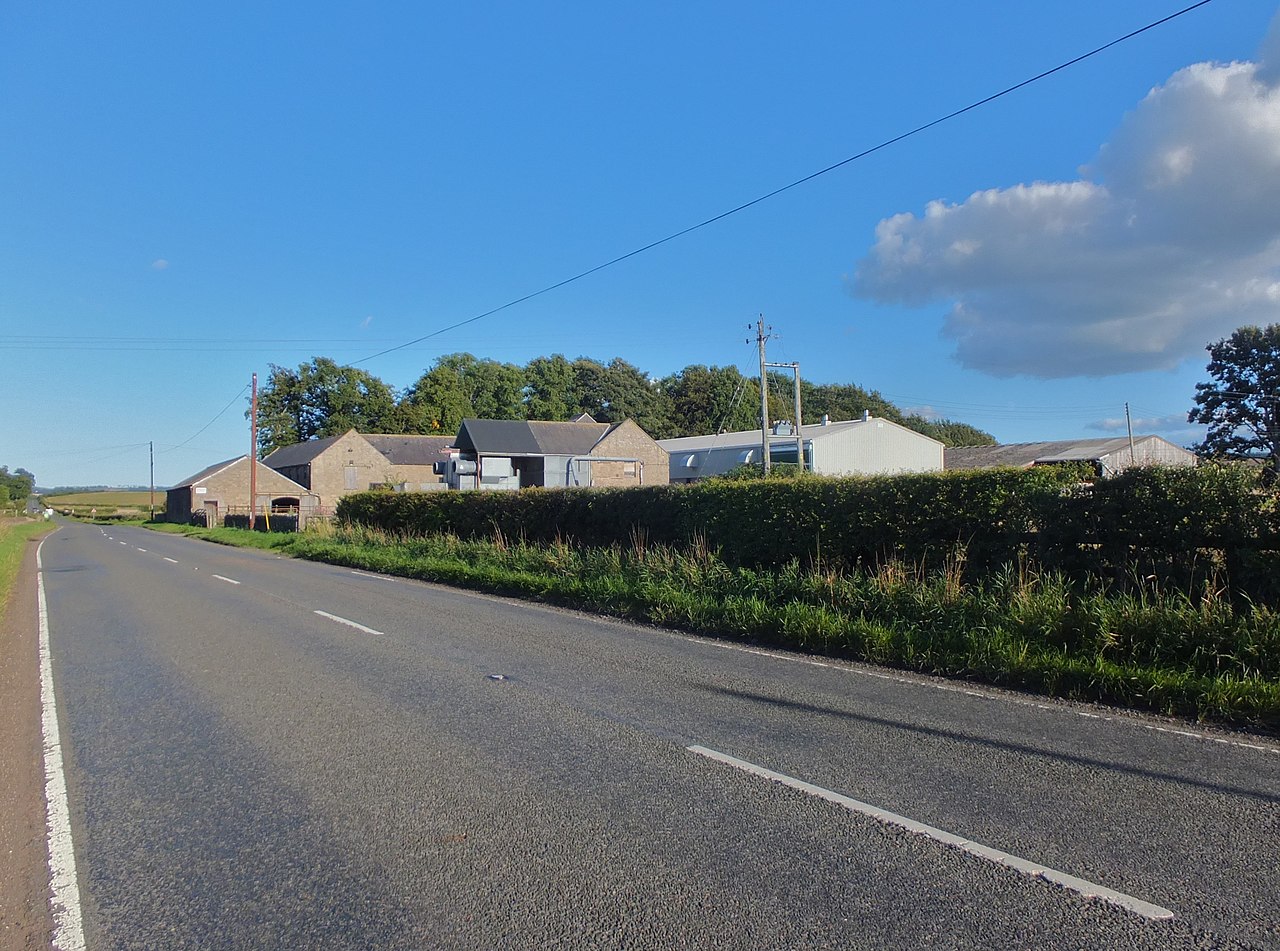
Topics > Northumberland > Crookham Westfield > The King's Stone NW of Crookham Westfield
The King's Stone NW of Crookham Westfield
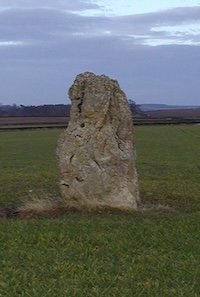
The King's Stone, to the north-west of Crookham Westfield in Northumberland, is a standing stone of either late Neolithic or early Bronze Age date. It is formed from cherty magnesium limestone and and stands to a maximum height of 2.5m. There is a tradition that it marks the spot where King James IV was killed at the Battle of Flodden Field in 1513. In the 16th century, the stone was a favoured meeting place for raiders. The King's Stone is a Scheduled Monument (legally protected).
Scheduled Monument (#1002906): The King's Stone NW of Crookham Westfield Farm
Click the headings below to expand (selected extracts from the Historic England scheduling)
The King's standing Stone is well preserved example of a rare monument type which retains important archaeological information; the socket stone will retain significant archaeological deposits relating to its erection and subsequent use. In addition to it being an example of a rare later prehistoric monument, the King’s Stone has important historical connections including that with the Battle of Flodden Field.
The monument includes a standing stone of Late Neolithic/early Bronze Age date, situated on a slight knoll. The standing stone is of cherty magnesium limestone and measures approximately 1m by 1.3m and stands to a maximum height of 2.5m.
The King’s Stone, also known as the ‘Stone of Crookham More’ has long been an important landmark. It was mentioned frequently in the 16th century as a meeting place for raiders. In 1533 the garrisons of the border castles were ordered to meet at ‘Crookham Stone’ to avenge the burning of Cornhill and Wark. The name King’s Stone was given to the stone as tradition holds that it marks the spot where King James IV was killed at the Battle of Flodden Field in 1513.


from https://historicengland.org.u…
The King's Stone NW of Crookham Westfield Farm - Ford - Scheduling
- ....Standing stones are important as nationally rare monuments, with a high longevity and demonstrating the diversity of ritual practices in the Late Neolithic and Bronze Age. Consequently all undisturbed standing …
Added by
Simon Cotterill
from https://keystothepast.info/se…
The King's Stone (Ford)
- ....The King's Stone, a prehistoric standing stone of cherty magnesian limestone, (2) is traditionally said to mark the spot where King James IV was killed at the Battle of Flodden …
Added by
Pat Thomson
from https://www.themodernantiquar…
The King’s Stone
- Rhiannon
Jan 15, 2014
As regards the King’s Stone, which members had viewed that morning, it had really nothing to do with the battle [of Flodden]. It was, in fact, …
Added by
Pat Thomson

from https://historicengland.org.u…
The King's Stone NW of Crookham Westfield Farm - Ford - Scheduling
- ....Standing stones are important as nationally rare monuments, with a high longevity and demonstrating the diversity of ritual practices in the Late Neolithic and Bronze Age. Consequently all undisturbed standing …
Added by
Simon Cotterill
from https://keystothepast.info/se…
The King's Stone (Ford)
- ....The King's Stone, a prehistoric standing stone of cherty magnesian limestone, (2) is traditionally said to mark the spot where King James IV was killed at the Battle of Flodden …
Added by
Pat Thomson
from https://www.themodernantiquar…
The King’s Stone
- Rhiannon
Jan 15, 2014
As regards the King’s Stone, which members had viewed that morning, it had really nothing to do with the battle [of Flodden]. It was, in fact, …
Added by
Pat Thomson