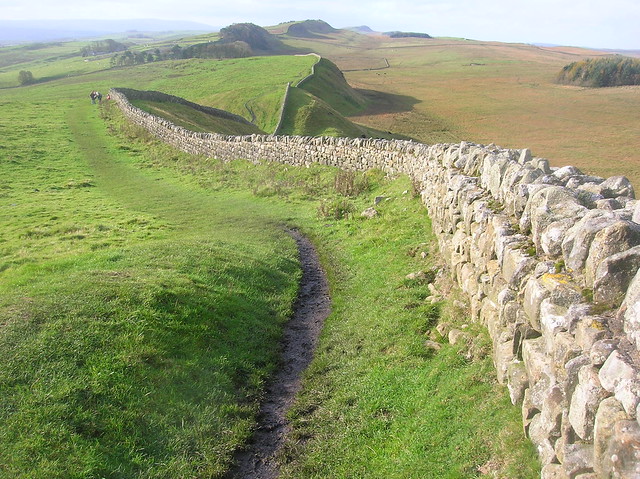
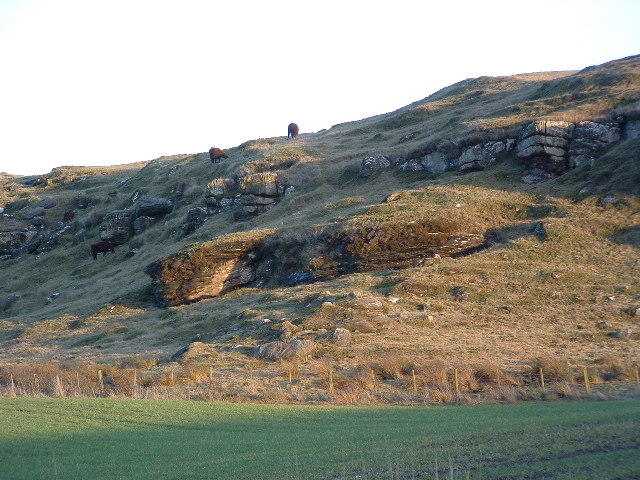
Topics > Heritage Sites > Hadrian's Wall > Wall Mile 48 > Milecastle 48 (Poltross Burn)
Milecastle 48 (Poltross Burn)
There are thought to have been 80 milecastles on Hadrian’s Wall, located every Roman mile (1,000 paces) along the Wall, with two turrets (observation towers) spaced every third of a mile between them. The Milecastles were rectangular forts manned by small garrisons (probably 10-30 soldiers). The milecastles significance was much more than just their role in defending the Roman frontier. The milecastles had gateways in the north and south walls, often with towers on the north gate. They controlled passage through the Wall, supporting the checking of movement and levying taxes (customs) on goods and people. The milecastles also provided a visible symbol of Roman authority and imperial control. After Hadrian’s Wall was initially built (AD 122-8), larger forts (such as Housesteads) were added to the wall, providing bigger bases for fighting units, suggesting a shift in Roman strategy. In the 1930s a numbering system was devised, with the Milecastles numbered east to west.


from Geograph (geograph)
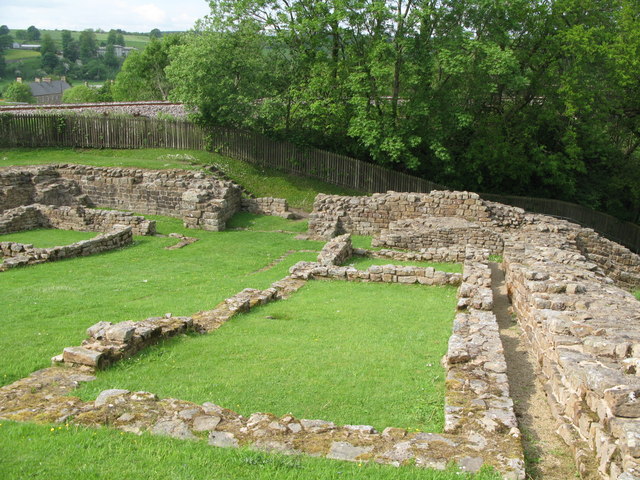
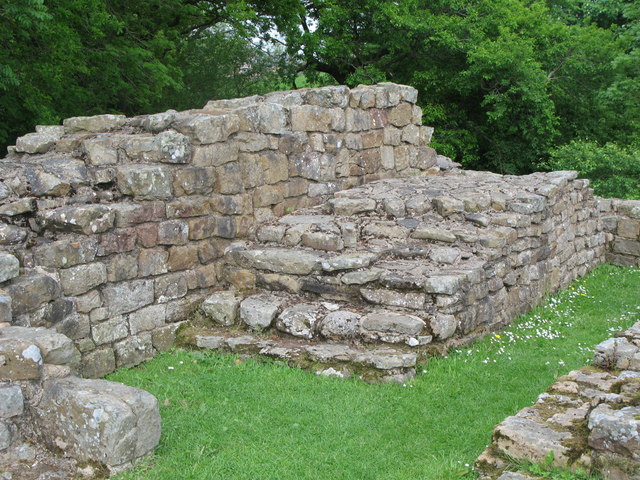
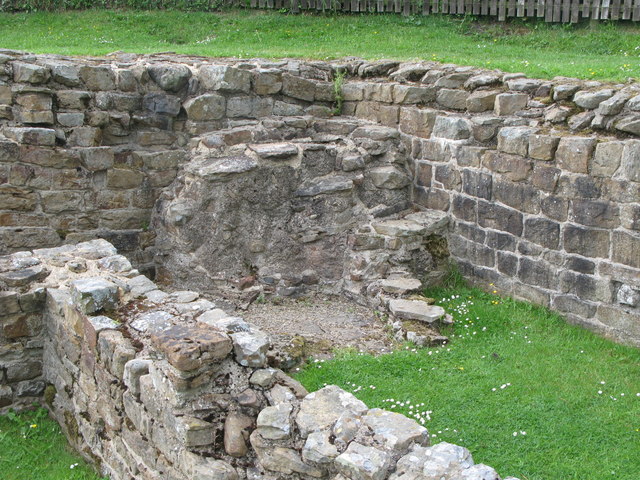
The remains of ovens in the northwest corner of Milecastle 48
Pinned by Simon Cotterill


from https://historicengland.org.u…
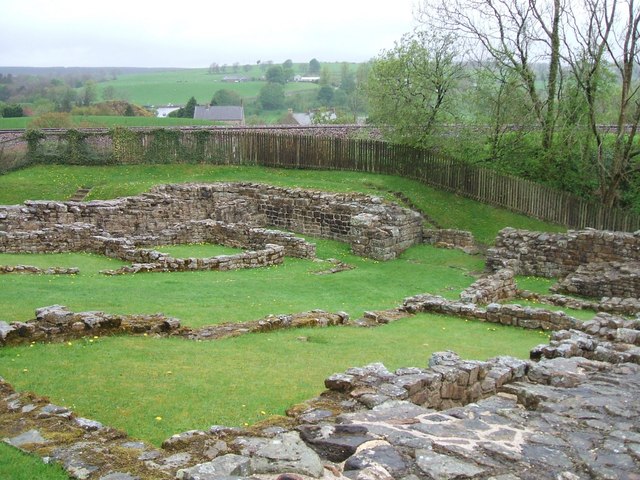
Hadrian's Wall and vallum and their associated features between Poltross Burn and the River Irthing in wall mile 48 - List Entry
- ....The monument includes the section of Hadrian's Wall and vallum and their associated features between the Poltross Burn in the east and the River Irthing in the west. Hadrian's Wall …
Added by
Simon Cotterill

from Geograph (geograph)
The remains of ovens in the northwest corner of Milecastle 48
Pinned by Simon Cotterill
from https://historicengland.org.u…
Hadrian's Wall and vallum and their associated features between Poltross Burn and the River Irthing in wall mile 48 - List Entry
- ....The monument includes the section of Hadrian's Wall and vallum and their associated features between the Poltross Burn in the east and the River Irthing in the west. Hadrian's Wall …
Added by
Simon Cotterill