Topics > Northumberland > Allenheads > Allenheads lead ore works
Allenheads lead ore works
Scheduled Monument areas - based on Historic England data (Open Government Licence).
Scheduled Monument (#1016348): Allenheads lead ore works
Click the headings below to expand (selected extracts from the Historic England scheduling)
Simple ore dressing devices had been developed by the 16th century, but the large majority of separate ore works sites date from the 18th and 19th centuries, during which period the technology used evolved rapidly. Ore works represent an essential stage in the production of metallic lead, an industry in which Britain was a world leader in the 18th and 19th centuries. Sites are common in all lead mining areas and a sample of the best preserved sites (covering the regional, chronological, and typological variety of the class) will merit protection.
The remains of the lead ore works at Allenheads are reasonably well preserved and are important as an unmodified example of a 19th century dressing floor. The survival of the associated bouse teams enhances the importance of the monument.
The monument includes the western part of the lead ore works at Allenheads, including the remains of a washing floor and a set of bouse teams, as well as the drainage tunnel and channel of the Fawside lead level, a revetted section of the River East Allen and a section of spoil tip. The bouse teams and the drainage tunnel and channel are Listed Grade II. The monument formed part of a wider complex of ore works and lead mines at Allenheads which included the Fawside level, begun in 1776, and the Gin Hill shaft which was dug by 1793. The complex forms the focal point of Allenheads planned industrial village, constructed for the workers and staff of the Blackett-Beaumont lead enterprises. All lead working activity on the site ceased in 1896.
A fine set of bouse teams, or tall, stone containers, are visible at the eastern end of the monument; these containers were used to store the newly mined lead ore prior to processing. The bouse teams are constructed of squared rubble and consist of 14 apsidal bays separated by stepped walls. Some of the bays still carry the remains of large timbers which formed part of a tramway, along which the lead ore was carried in trucks for tipping. At the northern end of the bouse teams there are the remains of a stone arched drainage tunnel; a paved and walled channel 70m long emerges from the tunnel and carries water from the Fawside level to the river at the south western part of the monument.
To the west of the bouse teams there are the earthwork remains of the associated dressing floors on which many of the ore processing operations, intended to wash and sort the ore from unwanted impurities, were carried out. The floors are visible as a level surface containing the remains of several rectangular and square depressions; these depressions are interpreted as buddles and/or slime pits. The stone footings of a building are also visible. The washing floors are flanked on the north by the River East Allen which is contained within a paved and stone lined channel; it is thought that the walled channel was constructed partly in order to protect the washing floor from erosion by the river. At the north western end of the monument there is a section of a large spoil heap associated with the mining and ore processing activities at Allenheads.


from https://historicengland.org.u…
Allenheads lead ore works - Scheduling
- Approximately 10,000 lead industry sites are estimated to survive in England, spanning nearly three millennia of mining history from the later Bronze Age (c.1000 BC) until the present day, though …
Added by
Simon Cotterill

from https://www.geograph.org.uk/p…
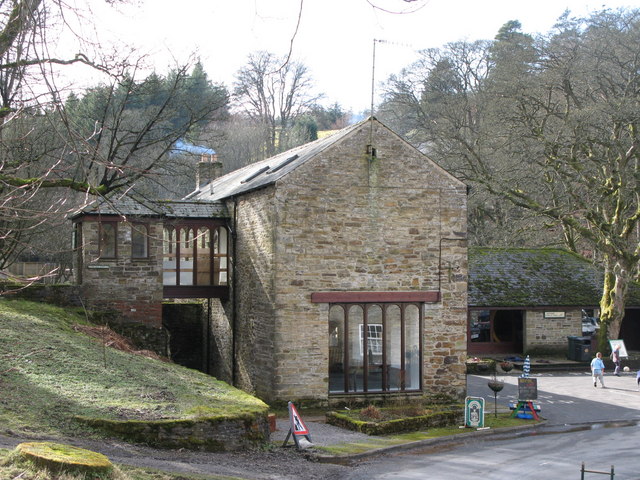
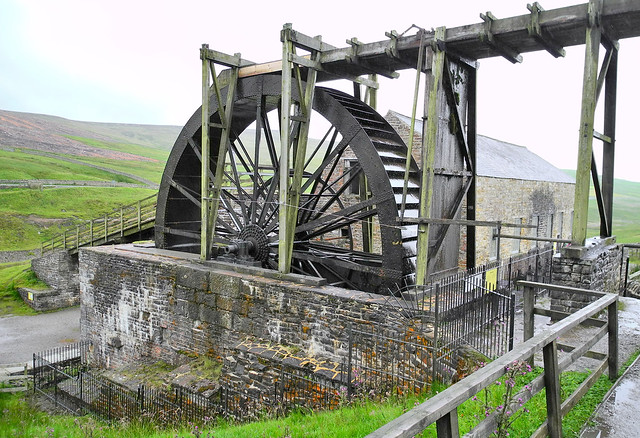
Reservoir tank & bouse-teams of Beaumont Lead Mine, Allenheads
- "The western part of the lead ore works at Allendale include remains of a washing floor and a set of bouse teams, as well as the drainage channel of the …
Added by
Simon Cotterill

from https://historicengland.org.u…
Allenheads lead ore works - Scheduling
- Approximately 10,000 lead industry sites are estimated to survive in England, spanning nearly three millennia of mining history from the later Bronze Age (c.1000 BC) until the present day, though …
Added by
Simon Cotterill
from https://www.geograph.org.uk/p…
Reservoir tank & bouse-teams of Beaumont Lead Mine, Allenheads
- "The western part of the lead ore works at Allendale include remains of a washing floor and a set of bouse teams, as well as the drainage channel of the …
Added by
Simon Cotterill