Topics > Heritage Sites > Hadrian's Wall > Wall Mile 41 > Turret 41a (Caw Gap)
Turret 41a (Caw Gap)
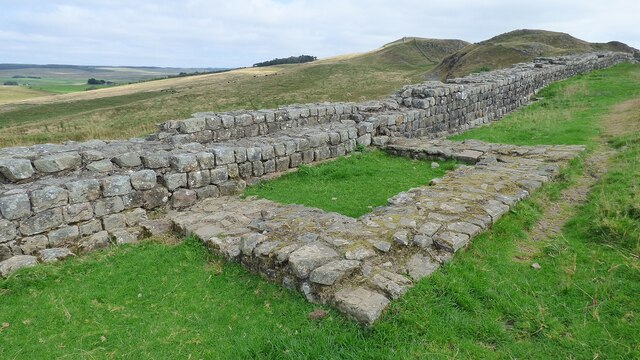
Turrets on Hadrian’s Wall were small watchtowers built into the wall, with two turrets per Roman mile, located between larger milecastles. They provided elevated viewpoints for small groups of 4 to 6 soldiers to spot threats and offer basic shelter for patrols. Turrets significantly enhanced continuous surveillance and control of the frontier by housing sentries between main garrisons. Their importance lay in forming an integrated part of the wall’s defensive system, enabling rapid communication and constant vigilance against incursions, turning the wall into a manned frontier rather than a simple barrier. Under a naming system introduced in 1930, turrets are numbered 1 to 80 from east (A) to west (B) and given numbers as pairs, taking the number of the nearest milecastle to their east.




from Geograph (geograph)
English Heritage information board relating to Turret 41a near Caw Gap on Hadrian's Wall
Pinned by Simon Cotterill



from Geograph (geograph)
English Heritage information board relating to Turret 41a near Caw Gap on Hadrian's Wall
Pinned by Simon Cotterill