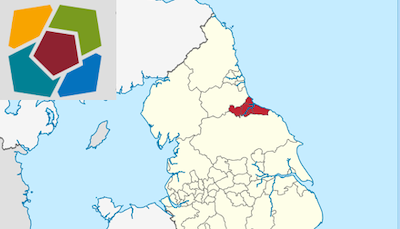
Topics > Tees Valley > Civil Parishes in Tees Valley > Claxton Civil Parish > Claxton medieval moated site
Claxton medieval moated site
Note: Scheduled Monument area - map data from Historic England c/o Open Data UK, under the Open Government Licence, imported into Google MyMaps, March 2026.
The Claxton medieval moated site is located to the south-west of Hartlepool. It is situated by North Burn and about ¼ mile south of Claxton Grange. The site is associated with the Claxton family, who were lords of the manor from the late 11th century until the 15th century.
The earthworks are now largely ploughed out, but it remains a significant, well-preserved archaeological site, with evidence of both timber and stone structures. Historically, it consisted of a main island, surrounded by a water-filled or dry ditch, which historically stood over a metre high. The main island housed an aristocratic residence, and there was an additional annexe, likely used for gardens, outbuildings, or, livestock. The site is a Scheduled Monument (legal protection).
Scheduled Monument (#1013947): Claxton medieval moated site
Click the headings below to expand (selected extracts from the Historic England scheduling)
This site is an important survival within the Lower Tees Valley. Medieval moated sites would originally have been more numerous in the area. Intensive arable agriculture, however, has led to the poor survival of most other examples. From a national perspective the importance of the site lies in this regional rarity. Of particular note are the waterlogged remains known to remain preserved within its enclosing ditches.
The site is an example of a moated site of medieval date. The moat encloses a main island of irregular shape and also a dependent annexe to the east. Formerly the enclosing earthworks stood to a height of over 1m in places. These however have suffered plough damage and are now virtually ploughed out. Despite this it is known that substantial remains survive intact beneath the present ground surface. The evidence of field survey and limited excavation has indicated that timber and also stone buildings were located on these enclosed platforms. Significant remains of these are considered to survive across the whole of the enclosed area. Of particular interest and importance are the waterlogged deposits containing wood, seeds, leather and other plant remains also revealed during excavations which remain preserved in the silted up moat.

from https://historicengland.org.u…
Claxton medieval moated site
- ...The site is an example of a moated site of medieval date. The moat encloses a main island of irregular shape and also a dependent annexe to the east. Formerly …
Added by
Simon Cotterill

from landscapebritain.co.uk/historic-monuments/220940/claxton-medieval-moated-site/
Claxton medieval moated site LiDAR Map
Added by
Simon Cotterill

from https://historicengland.org.u…
Claxton medieval moated site
- ...The site is an example of a moated site of medieval date. The moat encloses a main island of irregular shape and also a dependent annexe to the east. Formerly …
Added by
Simon Cotterill
from landscapebritain.co.uk/historic-monuments/220940/claxton-medieval-moated-site/
Claxton medieval moated site LiDAR Map
Added by
Simon Cotterill