From fields to forts — Greaves Ash’s role in Roman Britain



-
Description
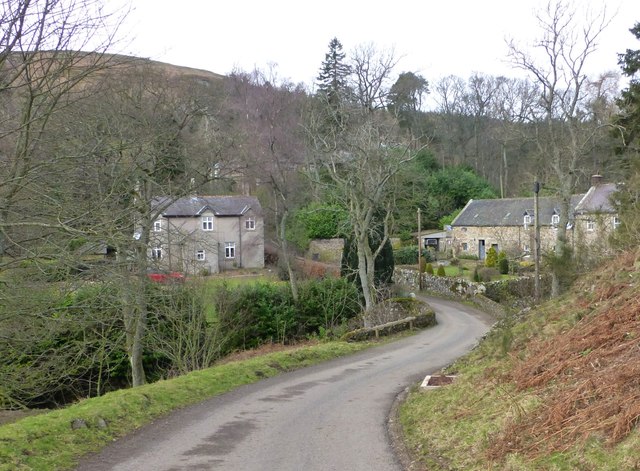
Photo by Mick Garratt, 31 October, 2023, Geograph: I see some squiggly lines on the map, paired with fancy Gothic writing, and I just can’t resist taking a look. And more often than not, it turns up a gem. This is Greaves Ash, close to Linhope, high up in the Breamish Valley. Turns out, it is a big Romano-British settlement, with the obvious remains of many roundhouses, walls, and trackways to look at. There were some excavations back in the 1850/60s, but modern archaeologists have re-evaluated it, along with all sites in the Breamish valley. Greaves Ash is one of, if not the biggest, settlements in the valley. It has clear connections to other settlements and hill-forts, spread across a landscape of fields and boundaries. That’s a sure sign that folks put a lot of effort into making this land thrive, a land which has nutritious, volcanic soil. It drains well — although that’s hard to believe this weekend — and is easy to plough and hoe. You can see large swathes of terraces carved into the hillsides lower down the valley. Up on the Cheviot meadows, sheep grazing is good. And they didn’t just keep it all for themselves. There’s evidence that back in the 2nd century AD, the locals here sold the surplus to the Roman armies. And it seems like they did pretty well for themselves, because the villages they built were quite substantial, like the one at Greaves Ash. Sheep, wool, and grains were sent to the forts along Hadrian’s Wall. They might have even traded craft items with the forts and the town at Corbridge. The land to the north of Hadrian’s Wall was always on the edge of the Roman Empire. Even when the Antonine Wall briefly was built across Scotland’s central belt, they certainly weren’t at the heart of things. But that’s not to say the Romans didn’t leave their mark. Rome’s interests went beyond their borders, and the folks out on the edge of the Empire were sure to be interested in what was happening inside it. The tribes of the Cheviots seemed to have been on good terms with the Romans, perhaps acting as a buffer with the Picts further north. The Breamish Valley drains eastward, providing to a natural route out of the hills to the coast at Berwick and, by a Roman road, south to the forts and towns of Hadrian’s Wall. But let’s not forget, the tribes of the Cheviots were considered barbarians, so their traders probably had to wait in line at the Wall’s gates and prove they were legit before being allowed to pass through. From my blog ‘From Fields to Forts — Greaves Ash’s Role in Roman Britain’. 2023. Out & About ...[accessed 4 November 2023]. Photo c/o Wikimedia Commons, licensed under the Creative Commons Attribution-Share Alike 2.0 Generic license. -
Owner
Geograph -
Source
Local (Co-Curate) -
License
What does this mean? Unknown license check permission to reuse
-
Further information
Link: https://www.geograph.org.uk/photo/7643786
Resource type: Text/Website
Added by: Simon Cotterill
Last modified: 1 hour, 48 minutes ago
Viewed: 10 times
Picture Taken: Unknown -
Co-Curate tags
