Maia


-
Description
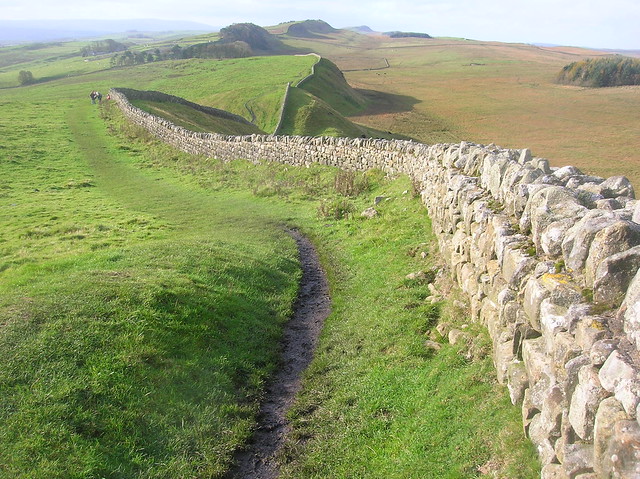
Hob Uid: 10116 Location : Cumbria Allerdale Bowness Grid Ref : NY2227062700 Summary : The site of the Roman fort of Maia at Bowness-on-Solway, part of the Roman defence supporting Hadrian's Wall along the Cumbrian coast. There are no visible remains. Excavation uncovered the remains of an early Hadrianic timber fort; it was replaced by a stone fort in the late Hadrianic period and underwent major rebuilding in the 3rd century AD. The fort had the unusual feature of having its east-west axis orientated along Hadrian's Wall like Housesteads and Great Chesters. It measured 128m north/south and 186m east/west, covering an area of 2.38 hectares, and is the second largest fort on Hadrian's Wall, but is closer in size to the forts known to have held military units: Housesteads and Birdoswald. More information : [NY2227 6270] Roman Fort [GS] (Site of) [NY2215 6267] Roman Ditch [GS] (1) Maia. (2) The Roman fort of Maia underlies the small town of Bowness-on-Solway, where Camden in 1599 notes traces of streets and walls, and mentions an ancient silted-up harbour. Excavations in May 1930 by Birley showed that the whole of the north wall of the fort had been destroyed by sea erosion, the position of the west and south walls were established, and part of the west gateway was uncovered. The size of the fort was calculated to be 710 ft E-W by 420 ft N-S, with an area of 7 acres. The south gateway appears to have been nearer the west end. The wide ditch at A is of Mediaeval date, the Roman ditch lying a short distance further east. An earlier turf wall fort must have existed here, but has not been located, and this in turn probably superseded Milecastle 80, probably also of turf, all traces of which would presumably have been lost by erosion. (3) Bowness was the westernmost point at which the Solway could be forded; this would explain its choice as the terminal point of Hadrian's Wall. (4) There are no visible remains of the fort, and the ditches referred to have been filled in. (5) Due to building development a 'rescue' excavation was undertaken in 1967 in Mill Field in which...... -
Owner
Heritage Gaterway - Historic England -
Source
Local (Co-Curate) -
License
What does this mean? Unknown license check permission to reuse
-
Further information
Link: https://www.heritagegateway.org.uk/Gateway/Results_Single.aspx?uid=10116&resourceID=19191
Resource type: Text/Website
Added by: Simon Cotterill
Last modified: 2 months, 1 week ago
Viewed: 154 times
Picture Taken: Unknown -
Co-Curate tags