HMS ERIN


-
Description
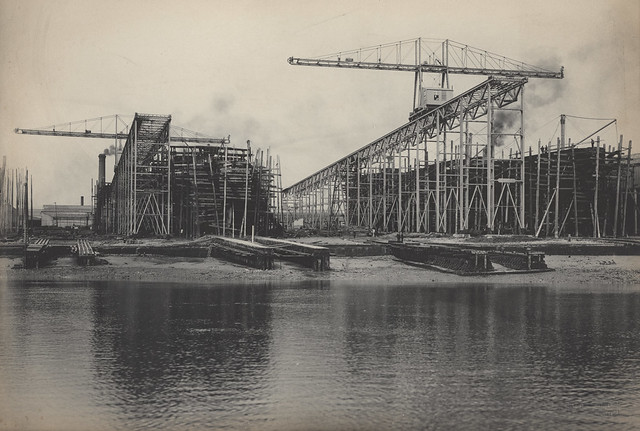
HMS ERIN Class……………………………Erin Battleship (Single vessel class) Builder………………………..Vickers, Barrow Yard number……………….425 Laid down..………………….1 August 1911 Launched….…………………3 September 1913 Completed.………………….August 1914 Propulsion.…………………..4 shafts : 4 Parsons steam turbines, 15 Babcock & Wilcox boilers Speed..…………………………21 knots Range…………………………..5300 nm at 10knots Fate…………………………….1922: Sold for breaking up by Cox and Danks at Queensborough HMS Erin was a Vickers design (by Sir George Owens Thurston) rather than the work of the RN, originally intended as one of a pair of ships ordered by Turkey, one ship was cancelled prior to being laid down, but the second hull, Reshadieh, was continued at Barrow. She was completed just prior to the outbreak of war in August 1914. lndeed, her Turkish crew were in Barrow to accept the vessel and were kept out of the yard under various pretexts by direct Admiralty order. once the inevitability of Turkey entering the war on the German side became clear. The ship was seized and commissioned for the Royal Navy as HMS Erin. She was loosely based on the King George design of which Barrow's HMS Emperor of lndia is an example. The hull is shorter and wider than the British design (to maintain the displacement, whilst making the ship easier.to handle) the armour belt considerably thinner to reduce weight, and Bunker capacity much reduced- this being acceptable for the envisaged Black Sea and local Mediterranean work. Whilst of standard British layout (with five twin turrets, one amidships) the. midiships turret had been placed one deck higher than usual, with a consequent improvement in its weatherliness. The shorter hull has compressed the boiler rooms; thus the funnels are unusually close for a British built ship, probably Erin's most conspicuous recognition feature. HMS Erin served with the Grand Fleet after September 1914. she was present at Jutland and, after the Armistice, was paid-off as Flagship of the Reserve Fleet at the Nore. She remained there until sold in 1922 for breaking up, to comply with the Washingion Treaty. An active life of just four years. HMS ERIN in circa1918 in a floating drydock believed to be Invergordon -
Owner
TimWebb -
Source
Flickr (Flickr) -
License
What does this mean? CC BY-NC-SA 2.0
-
Further information
Link: https://www.flickr.com/photos/42117802@N06/51582882177/
Resource type: Image
Added by: Simon Cotterill
Last modified: 4 months ago
Viewed: 200 times
Picture Taken: 1918-01-01T00:00:00 -
Co-Curate tags